Get updates from The Developer straight to your inbox Yes, please!




When London floods: “If you have vulnerable people living in basement flats, there's a huge risk”
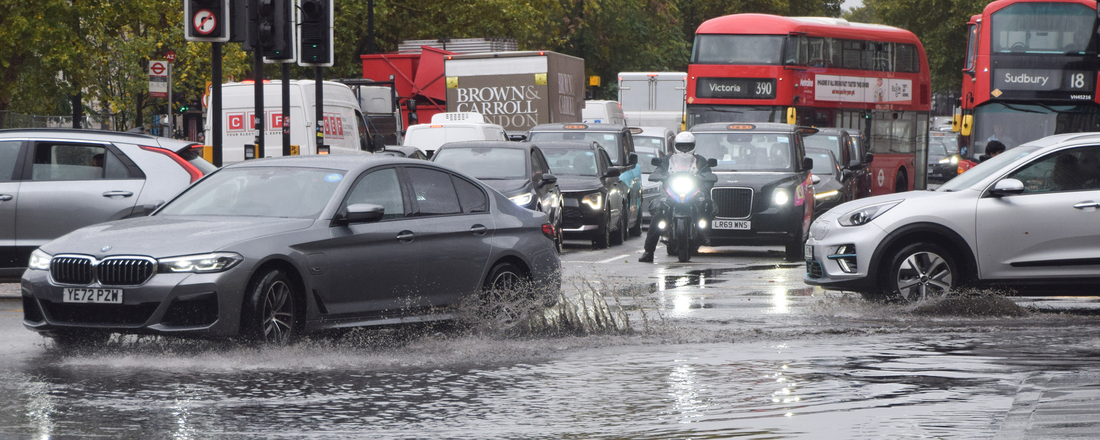
No one knows exactly how many basement flats there are in London, or where they are located. And surface water flooding, like rain, can happen anywhere. It’s unpredictable, fast and a threat to life. Peter Apps reports


Pete Apps is a journalist and author of the Orwell Prize-winning book Show Me The Bodies which covers the build up to the Grenfell Tower
......Pete Apps is a journalist and author of the Orwell Prize-winning book Show Me The Bodies which covers the build up to the Grenfell Tower
......Joan was playing bridge online with friends on 12 July, 2021 when it began to rain. It was the tail-end of the COVID era, and after weeks of hot, dry weather storm clouds were building over London. As the rain started to fall, Joan looked out the window and thought it looked heavier than normal.
Joan lives in South Hampstead – downhill from the Whitestone Pond, in Hampstead, the highest point in central London. When the rain falls, it runs down from there, previously causing flooding locally in 1975 and in 2002.
As Joan looked out, she saw her street turn rapidly into a fast-flowing river. Manhole covers erupted as the sewers overflowed. “A river of water came down the street and the sewers weren’t big enough to cope” she says.
In the event, Joan got lucky. Her flat has a side entrance with a passage that slopes down towards the garden, meaning the flood water flowed round the side of her property. Others weren’t so fortunate.
“There was an elderly man living on his own. The water rose to over five feet outside his flat, and he only survived because the people living upstairs realised what was going on,” she says. “He came very, very close to drowning. He said he felt his life flashing before his eyes as the water was rising.”
In July this year, the Greater London Authority sent flyers to 56,000 basement properties which are in the areas it believes be most at risk. There is currently no form of active alert – such as mobile phone updates
London’s floods in July 2021 came with little warning. The weather forecast was for 20mm to 30mm of rainfall, and a yellow notice had been issued by the Met Office. But instead, parts of London had seen 80mm fall inside an hour – equivalent to a month’s worth of rainfall.
The deluge coincided with a high tide, which meant water could not escape into the Thames. The drains were overwhelmed and mixed sewage and flood water exploded back up onto London’s streets. More than 1,000 properties flooded and there were insurance losses of more than £281m.
This will happen again. Surface water flooding - when heavy rainfall overwhelms the drainage systems - is the number one flooding risk on the London Risk Register, graded both likely and severe in impact.
The risk is exacerbated in several ways: First, London’s population of 9m has greatly outgrown a sewer network built in the Victorian era for a population of less than half that size; second, the development of the city has concreted, paved and tarmacked over porous surfaces that would have once absorbed rainwater and green space equivalent to 2.5 times the size of Hyde Park is lost every year; and third, climate change is delivering far heavier, more intense bursts of rainfall than we have ever previously seen.
The result of all this is a serious new risk to the city, which is extremely difficult to predict and prepare for. “It’s very hard to manage, it’s getting worse because of climate change and it’s got the potential to do an awful lot of damage,” says Kristen Guida, head of strategy, prevention and community resilience at London Resilience, a part of the Greater London Authority. “Surface water flooding is more difficult to manage than river flooding, because it can happen almost anywhere so large-scale infrastructure like flood barriers and defenses are not the answer.”
London is the most exposed part of the UK to this kind of risk: one in eight homes in the city are in high-risk zones for surface water flooding, with the city accounting for 30% of the country’s total homes in this category. And the risk is particularly extreme for one type of property in particular: Basement flats. A 2022 assessment suggested a worst case scenario of 40 deaths in basement flats, as well as 314,000 people needing evacuation.
“I think flood doors should be banned in basement flats” – a door which allows some water in will at least give people a better chance of getting out
“Surface water flooding is very hard to predict. Rain can fall anywhere,” adds Brenda Dacres, executive member for transport and environment and mayor of Lewisham. “It causes really fast flowing water which can pose a risk to life anywhere but particularly in basement properties.”
“The way surface water flooding becomes a life safety risk is basement properties,” says Guida. “If it comes in the middle of the night, and if it happens very, very quickly, people could be at risk.”
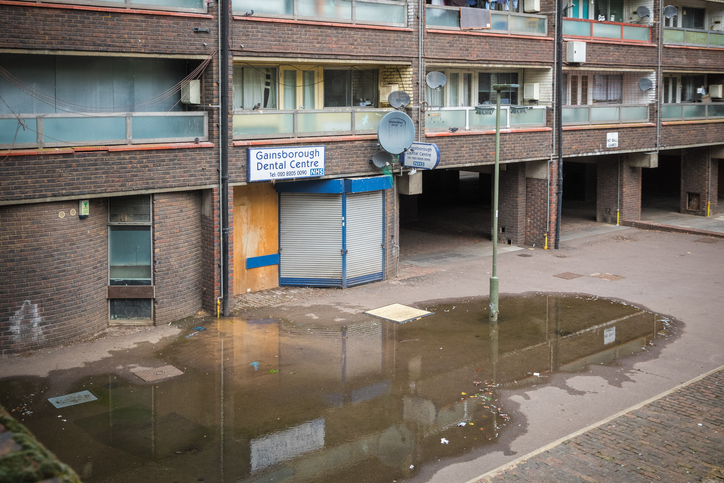
“Most of the risk in a developed city like London is economic damage, but because extreme surface water flooding can strike with very little warning, it can create instances where there is less planning or emergency services capacity to evacuate people from flooded areas.
“In that case, there is a risk of loss of life, especially if people are trapped below ground,” adds Dr Raghav Pant, senior research associate in the Environmental Change Institute at the University of Oxford and member of the MACC Hub, which supports UK-wide research and evidence on climate adaptation. “Especially if you have vulnerable people living in basement flats, there’s a huge risk that there could be loss of life,” says Pant.
No one knows exactly how many basement flats there are in London, or where they are located. In July this year, the Greater London Authority sent flyers to 56,000 basement properties which are in the areas it believes be most at risk. There is not currently any form of more active alert – such as mobile phone updates – to people in these premises.
But no comprehensive database of basement properties exists. Even if one was created, it would exclude unregulated spaces, beneath shops and hidden in the cellars of privately rented homes where some of London’s most precarious citizens live.
“In an event like this, flood waters mean the police aren’t coming immediately, the firefighters and ambulances are going to struggle to get to you – no-one’s coming until the flood waters start to go down”
Kerry Halfpenny, a flooding consultant and building surveyor, has researched the risk to life in London from surface water flooding in basement flats. She says she is particularly worried by the installation of flood doors in basement properties - which are tested to hold back water up to a height of 600mm. This might help protect the contents of the flat, but if water builds up against the front door, it could make opening the door impossible.
To deal with this risk, flood doors are sometimes fitted with a window that works as an escape hatch (a bit like a stable door). But, Halfpenny says, this is not a good safety measure. “What if you’re disabled? What if you’ve got a family with a baby and a five-year-old? How on earth are they going to get out that window, especially if it’s into rushing water?”
Halfpenny says flood doors installed on basement flats and ground floor flats with only one exit increase the risk to life. “I think flood doors should be banned in basement flats,” she says. A door which allows some water in will at least give people a better chance of getting out. Alternative escape routes also need to be considered where possible.
She’s also concerned about emergency services’ responses: “In an event like this, flood waters mean the police aren’t coming immediately, the firefighters and ambulances are going to struggle to get to you – no-one’s coming until the flood waters start to go down,” she says.
“People are going to be trapped and phone 999, which means call handlers are the most important part of the initial emergency response.” But in a horrible echo of the Grenfell Tower disaster, there isn’t a national protocol for call handlers giving advice to those in basement flats when surface water floods happen. In Germany 190 people tragically died during floods in 2021, with emergency responders later found not to have prioritised evacuation. “When call handlers give the wrong advice in this situation, people die,” Halfpenny says.
Halfpenny feels building regulations are insufficient on this issue. “British Standards are about protection from water ingress, not about flooding,” she says. “And flooding is dealt with by Environment Agency risk assessments, but that’s about river and coastal floods, not surface water.”
The lesson is clear. When floods hit a city, those most at risk are the ones who happen to be below ground level
These risks are not theoretical. When the remnants of Hurricane Ida struck New York City in September 2021, there were 13 deaths. “The most common circumstance of death was drowning in unregulated basement apartments,” said a review.
In Valencia, where more than 200 people died in floods in November 2024, there were several fatalities in basement car parks among residents who had rushed to move their cars and suddenly found themselves trapped.
At least 14 people died when flood water poured into underground train tunnels and submerged a packed commuter train in Zhengzhou, China in July 2021 - with the death toll widely believed to be higher. The lesson is clear. When floods hit a city, those most at risk are the ones who happen to be below ground level.
Like many of the impacts of climate change, this impact will not be felt equally. Rented basement flats are highly likely to be the lower-end of the rental market. For unregulated basement properties, this is only going to be more extreme. “Research indicates the impacts of surface water and sewer flooding will be disproportionately felt by London’s most marginalised communities,” the Surface Water Strategy Group’s interim report states.
So what can be done? In the aftermath of the 2021 floods, efforts began to develop a strategy to mitigate the damage from a future event. A difficulty, though, was the fragmented nature of the public sector. The work required to address surface water flood risk sits partly with the London Fire Brigade, the GLA, each of the London boroughs, with the Environment Agency, with Thames Water and with major landowners like Transport for London to varying degrees. A strategic response needs to bring all of these bodies together. Flood Ready London, created in the aftermath of the 2021 floods, attempts to do this. “In July 2021, it became very obvious that we needed to come together with these different partners and look at how we can make it more of a cohesive effort to manage surface water,” says Dacres.
The truth, though, is that this is big work and it needs to happen at scale to make a meaningful difference. Currently it isn’t
The group has put together a surface water strategy for London. This involves a move away from work based on borough boundaries to mapping of where flood water is likely to flow through the city, and a strategy based on catchment areas where it can be slowed or stopped. “Water doesn’t stop at the borough boundaries so that cannot limit our response,” says Dacres.
These catchment areas will then roll out ‘Sustainable Urban Drainage’ schemes: rain gardens, pocket parks, buried tanks and permeable surfaces to catch and absorb as much of the water as they can.
“It’s not always about putting the intervention where the flooding will be, it can be about looking more upstream, and thinking about how you prevent water from moving around in different parts of the city. We’ve done quite a lot of modelling around that, and I think we’re getting better at understanding the data, and understanding where the best places are to put [these interventions],” says Guida.
“We need to put things in place to capture as much of the rainwater as we can and stop it putting our communities at risk,” says Dacres. “A positive element is that the natural solutions like planters or pocket parks are things people often really welcome, so it’s something communities actually like to see implemented, and community groups can volunteer to help with the maintenance.”

There are also pilots underway to encourage utility companies to make streets more permeable, by implementing permeable solutions when they dig up roads and pavements for ongoing works. “I think that could be really transformational for how this kind of flood protection can be rolled out at scale across London,” says Dacres.
“What we’re doing is slowly trying to move a huge system to pay attention to this. And it requires a lot of resource and money that isn’t readily available,” adds Guida. “There is also the question of what’s even possible. Around 47% of London is green space already. But is that green space where it needs to be? And what are the limits of our adaptation measures? What’s even possible? There are limits on what our capacity to adapt with these solutions is, and that’s something we haven’t really grappled with.”
The question of social issues also comes up. A part of adapting to the risk would really mean providing alternative accommodation for vulnerable people forced to live in basements because they have no other choice, and regulating the unlicensed properties before floods strike. “Transformative adaptation essentially also needs to kind of think about those social vulnerabilities,” says Pant.
Surface water flooding is mixed with sewage, and the stench, filth and bacteria can take six months or more to shift
This risk will have a big impact on life in London in the future. “We’re at risk of lots of areas in London becoming completely uninsurable because of the flood risk,” says one senior housing sector source.
Properties with more than three flats are excluded from the government’s ‘Flood Re’ scheme of reinsurance to reduce flood insurance costs, which means properties with basement flats might see an excruciating rise in premiums. A growing number of Londoners are already struggling to obtain affordable flood insurance cover. This could be exacerbated from 2039, when Flood Re is due to come to an end, and the market will “return to fully risk reflective pricing for flood insurance” - not an enticing prospect for those in basement flats in London.
The damage from a flood does not disappear when the water subsides, but can linger for years, even decades, to come. This is manifested in mental health trauma, prolonged disruption and the financial insecurity that can come with losing so many possessions. (Many households, particularly renters, do not have contents insurance).
Joan says that all of these have happened to people in her community: “Some elderly tenants who have been here for decades have been flooded several times and are terrified it will happen again.”
Then there is the physical damage to a property. Surface water flooding is mixed with sewage, and the stench, filth and bacteria can take six months or more to shift. If a flooded property doesn’t properly dry out, it’s vulnerable to mould, with the potential impact on long-term health.
Still, change is happening. Joan and her neighbours have set up a Flood Action Group. They are working with the authorities to install sustainable urban drainage systems: Craters are being dug beneath the surface of the road and tanks put in to catch water. There are plans to approach a nearby cricket and tennis club – who could use trapped water for their grounds during the dry months.
They have submitted applications to a Thames Water flooding fund for two more rain gardens. They are working with groups in Hampstead to put measures in place higher up, to stop the water before it runs down to their community, as well as to the boroughs beyond. They are engaging with neighbours in basement flats to encourage them to install property resilience measures. And they are spreading awareness about what to do if the water does come, including encouraging vulnerable residents to make sure they have several people they can call on during a flood.
The reality of climate change, though, means that this is all a question of when, not if, these risks materialise. Part of Pant’s work, carried out through the Hub, involves projecting future flooding risks based on climate and population estimates:
“Given that there’s a lot of uncertainty in predicting future climate outcomes, we are not saying that the numbers that we come up with are definite,” Pant says. “But of course, the trends show that there is a very high likelihood of increased risk of flooding in the future, and there’s an increased risk of people being exposed and vulnerable to that flooding.”
“This is definitely going to happen,” adds Halfpenny. “There isn’t any doubt about that, unfortunately. The question is how well prepared we are when it does, and how many lives that preparation saves.”
Peter Apps is an award-winning journalist and author of books, Show Me the Bodies: How we let Grenfell happen and Homesick: How Housing Broke London and How to Fix It.
If you love what we do, support us
Ask your organisation to become a member, buy tickets to our events or support us on Patreon
Sign up to our newsletter
Get updates from The Developer straight to your inbox
Thanks to our organisation members
© Festival of Place - Tweak Ltd., 124 City Road, London, EC1V 2NX. Tel: 020 3326 7238