Get updates from The Developer straight to your inbox Yes, please!




Participatory building: How community construction takes engagement to a new level
Working in collaboration with charity Global Generation, Jan Kattein Architects has been building community spaces with volunteers aged 6 to 76 on site – and redefining the role of the architect in shaping places


“I really wouldn’t let volunteers do electrics or plumbing,” says architect Dr Jan Kattein.
“There are some things communities can’t easily help with – but then again, that begs the question, who is the community? We have contractors, we have architects…. Suddenly you realise that you have all the skills you need.”
We’re talking about participatory building, when a community gets involved in construction, as part of our conversation for The Developer Podcast. It’s one of the reasons I wanted to invite Kattein on the show.
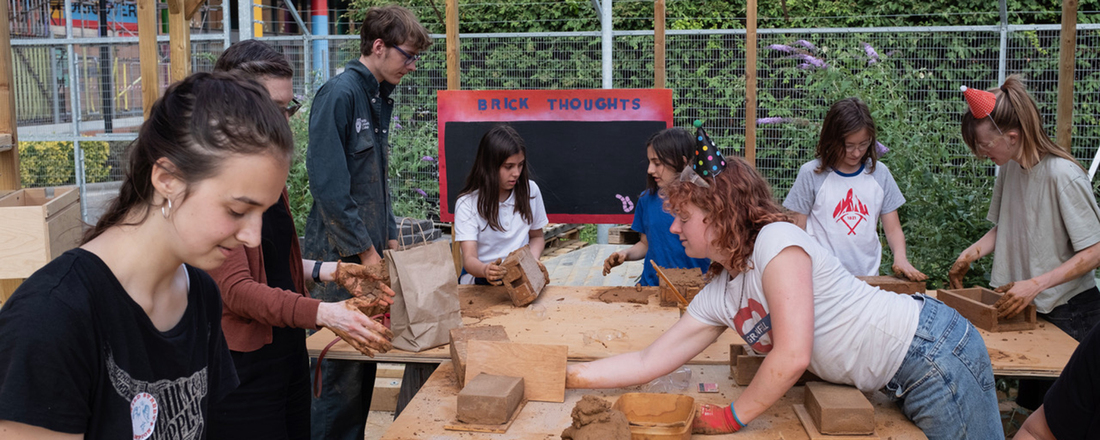
On his recent London projects, the architect, lecturer and founder of Jan Kattein Architects has been doing something remarkable: Letting children as young as six and adults as old as 76 build on site – making bricks and shakes, and learning vernacular techniques such as cordwood and cobauge, working in collaboration with London charity, Global Generation.
“For two years, we’ve been making bricks out of clay… we’ve been making wooden shakes out of Sweet Chestnut… we’ve been building with earth…” says Kattein, describing the projects taking shape on the Triangle site at King’s Cross.
“It’s a very inclusive process. All ages can participate,” says Kattein.
“The place that we create is just a legacy of that [participatory] process and much more dispensable”
Kattein’s participatory process is inspired by his practice’s earliest roots in set design for theatres – to make the budget work, he started building sets and props with the actors.
“After rehearsal, I would run a workshop and the actors would build chandeliers out of buttons, paint carpets and wallpaper. And as a result, this magical thing happened… this amazing social bond emerged.
“Architecture is also about collaboration and coordination in a team, but theatre took that to a whole other level.”
Listen to the full conversation in the podcast. Love what we do? Please consider supporting us as a member to keep our content free, inclusive and challenging.
When Kattein started working on high street renewal – his practice has worked on more than 30 high street projects – he brought that same approach to the work. “I spent a lot of time on site, speaking to stakeholders, knocking on doors.”
“Very quickly, engagement moved centre stage into my practice.”
Participatory construction came later – first, as a lecturer at the Bartlett School of Architecture, Kattein was keen to give architecture students real-world experience. Working with Dr Julia King and charity Global Generation, they built the Skip Garden at King’s Cross. “We had 10,000 visitors come and see it – and it was students who built it.”
The students gained experience in planning permission, design and construction – and graduated having built a real project. But like many of Kattein’s meanwhile projects, the Skip Garden is gone now – a temporary project that had to make way for progress on site. Does that bother Kattein? At first he brushes it off, but then admits it can be painful. He says embracing a temporary project allows for more experimental practice – it’s a test ground. But also it shifts the focus of the project:
“The most important thing is the people and the legacy and the networks. The place that we create is just a legacy of that process and much more dispensable than all the other things that we manage to create.”
Because it’s the process, not the realisation of the building itself, that is the core purpose of these participatory actions – especially on meanwhile projects, where every minute you’ve got the site counts.
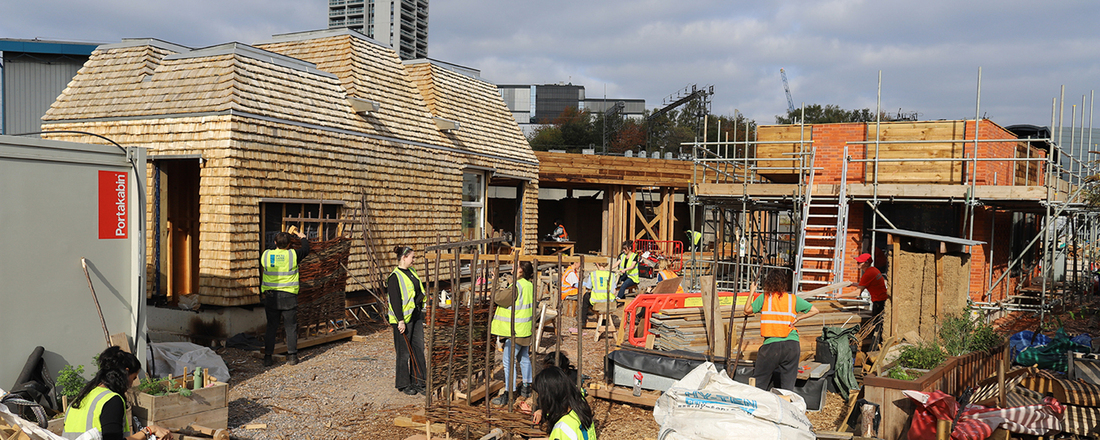
When Global Generation was offered the temporary use of an old paper shed as a meanwhile use at Canada Water, they needed to deliver a positive social impact from day one to make the most of the opportunity.
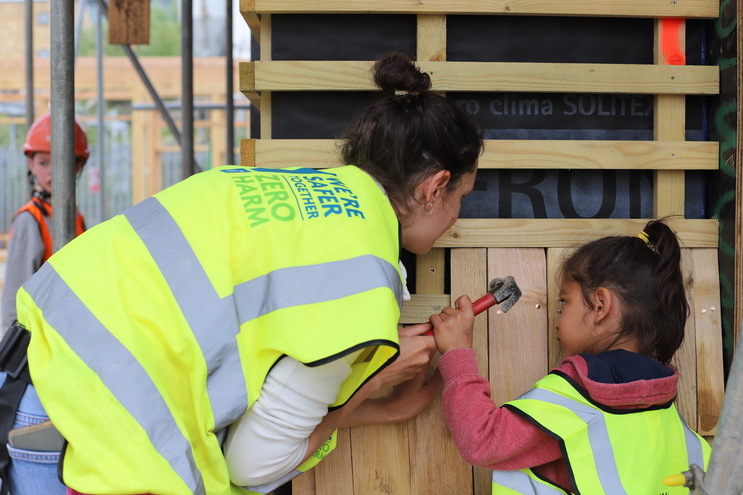
“We decided Global Generation should be running their programme through the project – so we set up [the charity] to act as a contractor and employ a site manager who was trained in health and safety, and in community management – because we still had to comply with the Construction Design and Management regulations which help to ensure the project is delivered safely.”
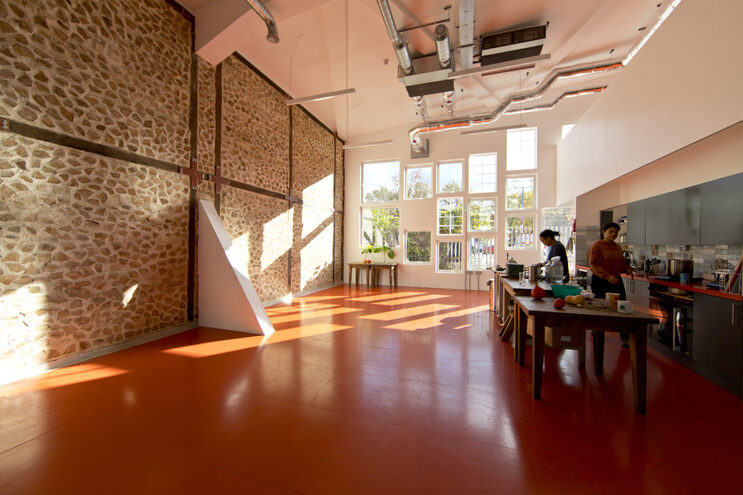
As if this doesn’t sound challenging enough, “We also set ourselves the ambition to build a building that barely used any new materials, and was all made from found, reclaimed and donated materials.”
Fast forward, and the Paper Garden building used 60% reclaimed and natural materials, from donated windows and doors, reclaimed plywood from construction hoardings, appliances and a kitchen from an office strip-out – and wooden logs from Epping Forest’s forestry management service. It was with the help of 3,000 volunteers.
The logs are where the primary school builders come in – “When we accumulated the materials we had to think about what skills we had which could be put to good and meaningful use. That is what informed the construction techniques, one of them being cordwood.”
In cordwood, wooden logs are bedded in lime. “It is a very forgiving technique that a six-year-old can master with a little bit of induction.” And a lot of pride. Kattein recounts hearing more than one child proudly drag their parent over to the building, saying “Mum, I built that part of the wall.”
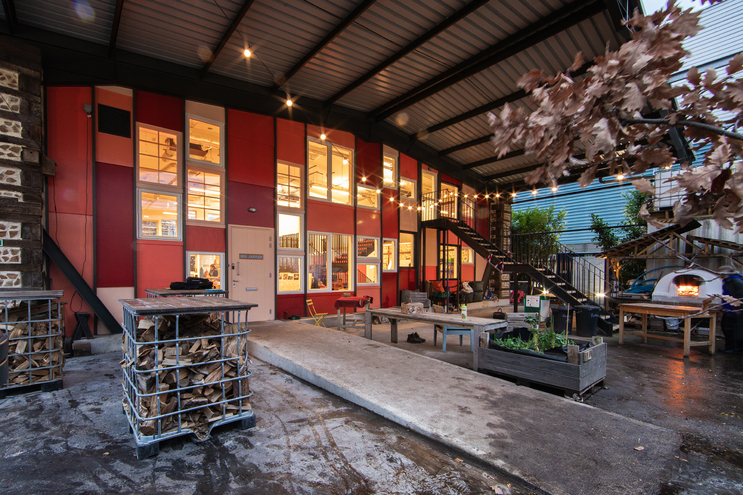
At the Triangle site in King’s Cross, Kattein is taking participatory construction one step further – and says he’s ready to scale up even more. These are permanent buildings out of natural materials built to last over 100 years – the site Is on a 999-year lease.
The volunteers have made (and personalised) 2,000 bricks, created the Sweet Chestnut shakes (it can take a day to make a single one) and participated in building techniques such as cobauge – a method that combines rammed earth with a fibrous mix for insulation. The latter had teething problems – part of a wall had to be demolished – but they built it again.
It’s all part of the learning – a huge benefit of these participatory projects. While unskilled volunteers gain confidence and have fun making materials, school leavers and other young people are gaining valuable skills on paid traineeships, while architect students have been getting some real-world site experience.
It almost makes you wish the construction phase never ends. But the engagement and learning will just change: Global Generation will be running its leadership and garden programmes out of the buildings.
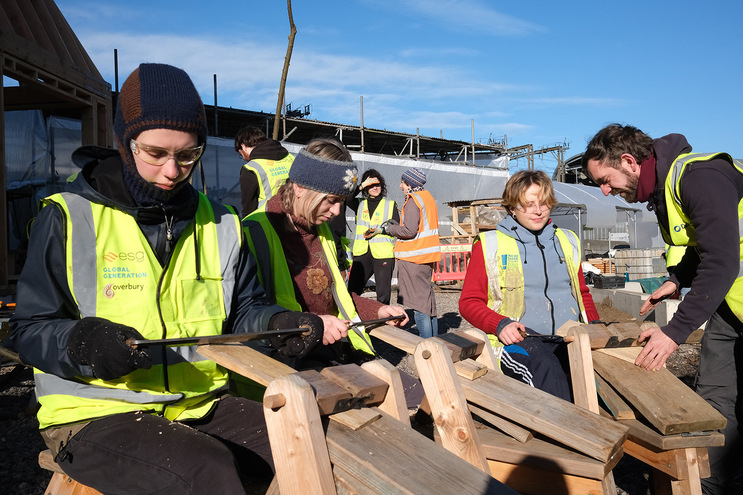
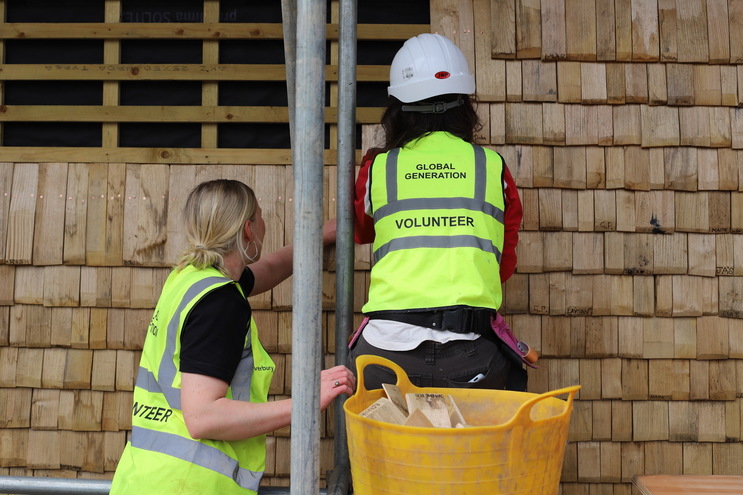
As for Kattein, he holds fast to the legacy of that process. “We want all those volunteers to take with them the memory of having participated but also act as ambassadors.
“A lot of those architecture students will go into professional practice and I really hope there will be a project landing on their desk where they can put their hand up and say, ‘I’ve built this before; I know how to do this.”
“Involving and investing meaningfully in as many people as possible in the process will lay the foundation for that legacy,” Kattein adds.
After all, the process is the purpose.
Sign up to The Developer Weekly email to find out when new episodes of The Developer Podcast go live. Want to advertise on the podcast? Email james@thedeveloper.live
member to keep our content free, inclusive and challenging.
If you love what we do, support us
Ask your organisation to become a member, buy tickets to our events or support us on Patreon
Sign up to our newsletter
Get updates from The Developer straight to your inbox
Thanks to our organisation members
© Festival of Place - Tweak Ltd., 124 City Road, London, EC1V 2NX. Tel: 020 3326 7238