Get updates from The Developer straight to your inbox Yes, please!




You are viewing 1 of your 3 free articles for this week. For more content from The Developer, register for our newsletter.

How PEACEPLUS is set to transform communities in Northern Ireland from Belfast to Ballykinlar
What started as a political settlement now forms the basis for strong, collaborative, resilient placemaking, writes Kimberley France


Publishing and Events Assistant,
The Developer and Festival of Place
Publishing and Events Assistant,
The Developer and Festival of Place
In 1995, following the ceasefire in Northern Ireland, the European Union announced bold new ideas to support peace and prosperity across the region’s towns and cities through the PEACE and INTERREG programmes.
Since their inception, the programmes have provided €3.39 billion in investment towards these shared goals.
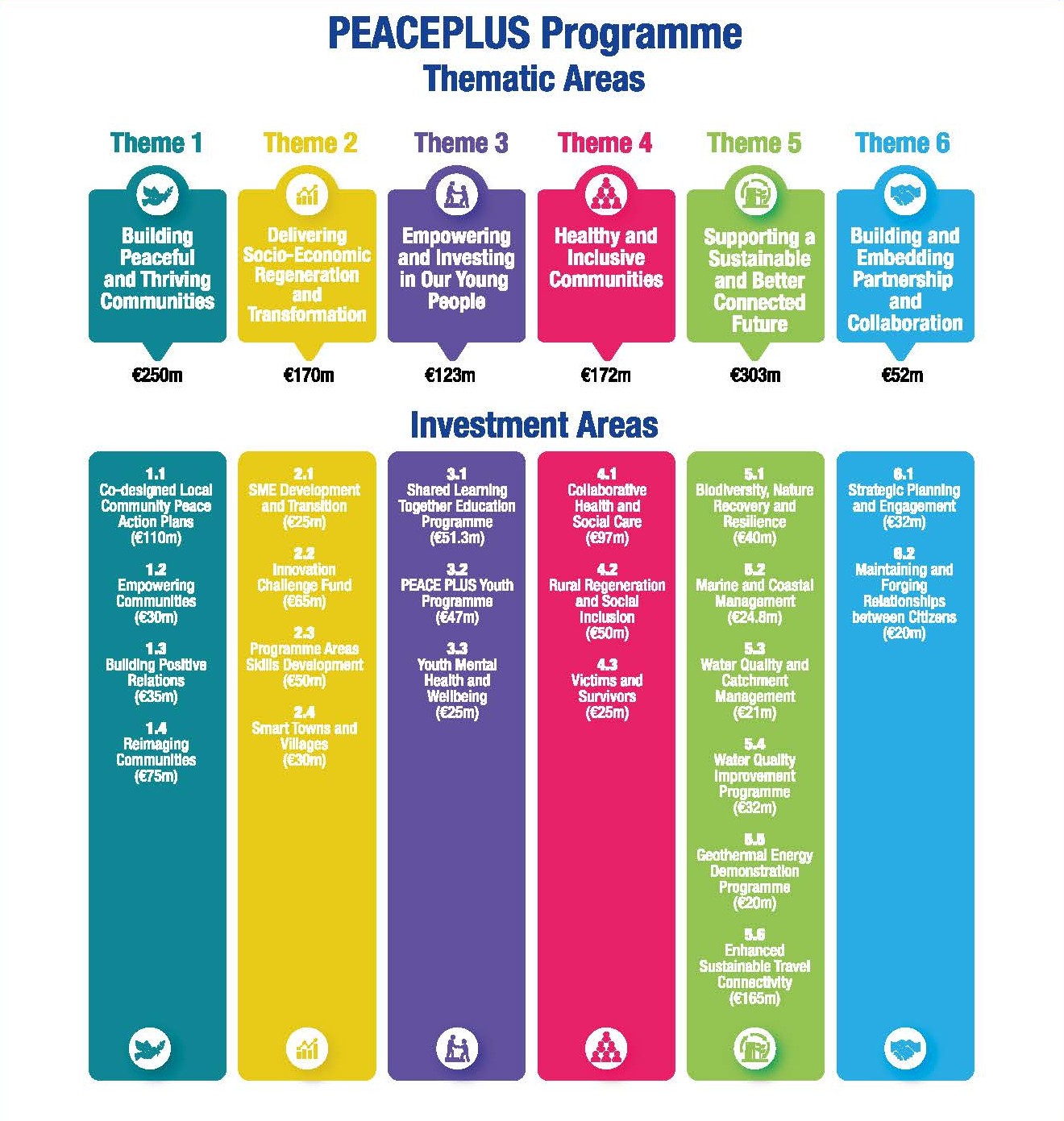
Now over a decade later, a further €1.14bn has been invested into this legacy through the PEACEPLUS programme; drawing together ideals from both the PEACE and INTERREG programmes towards neighbourhood and community transformation throughout Northern Ireland and six border counties.
The PEACEPLUS funding is being used to kickstart dozens of placemaking and community projects designed to promote peace and social cohesion.
Over two million citizens and 200,000 beneficiaries were reached by the original schemes, informing six key priorities that underpin PEACEPLUS as a method to deliver social, economic and environmental development.
Now each of the 17 local authorities under the PEACEPLUS’ umbrella has the opportunity to form a Local Community PEACE Action Plan as part of the Building Peaceful and Thriving Communities priority.
Oversight of the co-design and development process has been established through PEACEPLUS Partnerships which see all participants as equal collaborators. These co-design partnerships complement existing community and county plans, engaging local authorities and building regional relationships. Each of the partnerships is designed to reflect the specific ambitions and needs of a local area.
In Belfast, some of the funding is being used to reshape the city’s spaces.
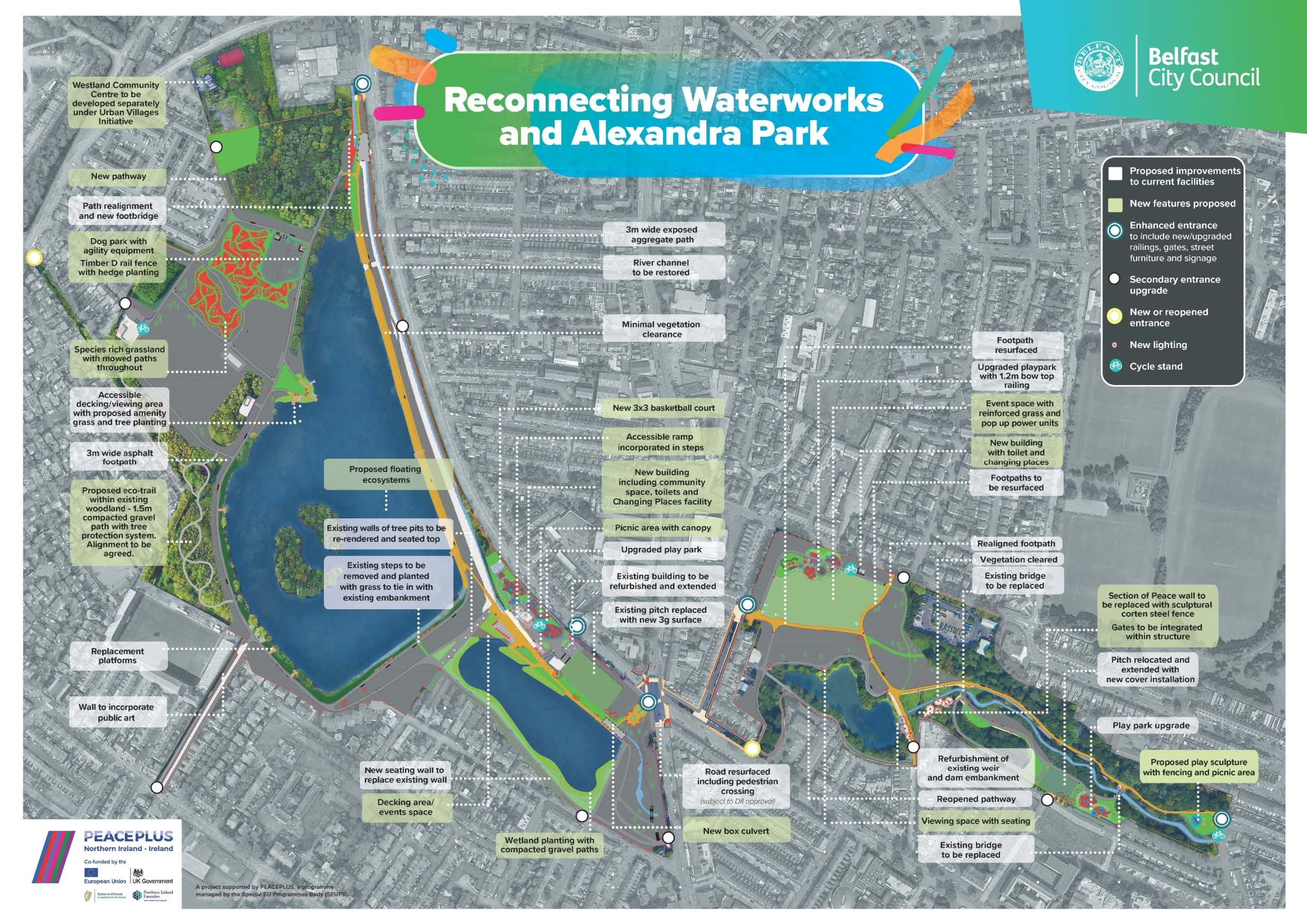
Launched in 2025, the €13.5million Reconnect Belfast project will see the redevelopment of two parks, Alexandra Park and the Waterworks, to “create a more cohesive society” through shared spaces and services, which they hope “will benefit and embed peace and reconciliation”.
Removing physical barriers posed by peace walls and roads, the intention is to connect the parks and links into other parts of the city to allow the community to come together in a welcoming space.
Investment into the refurbishment of existing play parks, entrances and football pitches will also bring the space up to standard alongside new additions such as two new community events spaces, basketball courts and a dog park.
Communities Minister, Gordon Lyons, said: “There are significant economic, social and environmental benefits related to the increased provision and use of open spaces and people can benefit greatly from being outdoors.
“I am confident that the Reconnected Belfast project and all that it offers, will deliver positive and long-lasting impacts for people of all ages and backgrounds,” Lyons said.
In addition to the parks, Belfast City Council has invested €17.4m to “build on peace and reconciliation, connect communities and strengthen good relations” across 16 projects that fit into three strategic themes: Thriving and Peaceful Communities engages over 7,600 people in youth programmes, sports and arts; Celebrating Cultures and Diversity aims to build understanding among diverse groups through five programmes; and Community Regeneration and Transformation plans to shape places of welcome across the city to enable safe, accessible meeting points for everyday interaction.
Special EU Programmes Body (SEUPB), Chief Executive, Gina McIntyre, said at the launch: “This ambitious and transformative project promises to be another shining example of capital investment in communities by the PEACE programmes.
“This investment demonstrates how shared civic spaces can act as beacons of hope within a community and become real catalysts for change and enhanced socio-economic environments.”
The Hub Ballykinlar
Belfast is only one example of how Northern Ireland’s towns and cities are being reshaped by PEACEPLUS regeneration programmes.
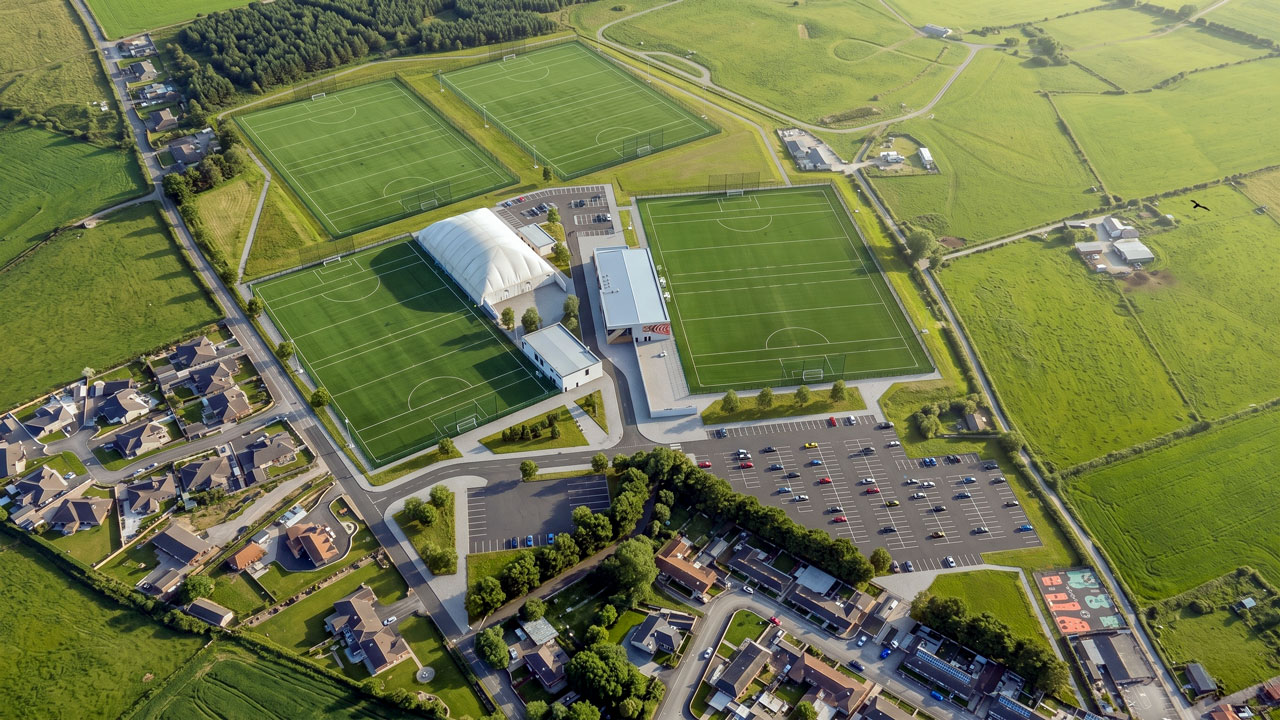
At the site of the former UK Ministry of Defence military barracks in Ballykinlar, County Down, the €15.4million Hub Ballykinlar will see the 30-acre plot transformed into a destination for ‘participation, wellbeing and shared learning’.
Led by Down Gaelic Athletic Association (Down GAA), the delivery of The Hub Ballykinlar is intended to address long-standing gaps in community infrastructure with a heritage and shared learning space and 2,000m² games area. This will include four pitches, walking trails, fitness suite, a heritage museum and other community facilities.
The search for a contractor began in February 2026 with a completion date of 2028. The idea of creating a sports centre of excellence was first floated in 1994 with planning permission secured in 2010, but the project couldn’t move forward until the barracks were decommissioned in 2017.
Riverine 2023
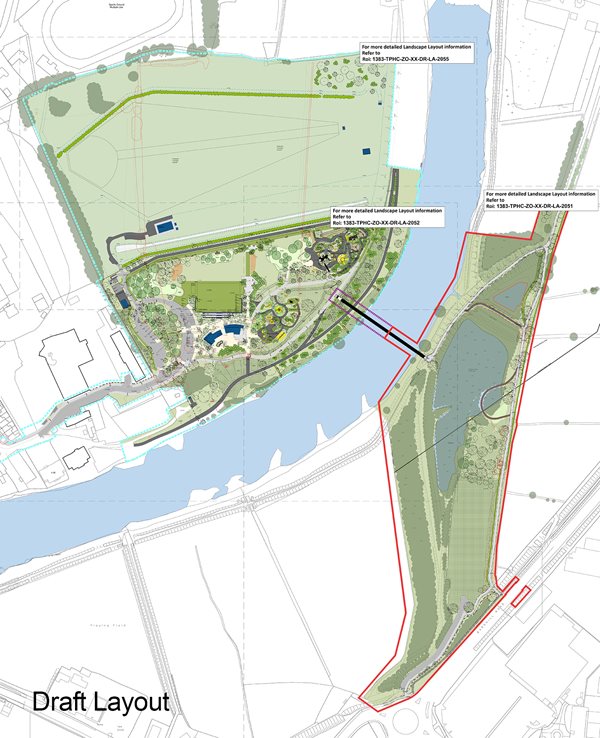
Similar to the Alexandra Park and the Waterworks project, Donegal County Council and Derry City & Strabane District Council have been awarded €16.7m to regenerate the border riverside of the Lifford and Strabane area to create a cross-border community park over the River Foyle.
Funding for the 30-acre site was announced in January 2026 and the project is currently in detailed design stage. Plans include a multi-functional outdoor space and external stage provision, play area, river walk and slipway access, landscaped green spaces and cycleways. The project will complete in 2028.
Minister for Public Expenditure, Infrastructure, Public Service Reform and Digitalisation, Jack Chambers TD said: “Riverine is a great example of what the PEACEPLUS programme can achieve when significant levels of funding are combined with dedication, enthusiasm and cross border collaboration between agencies and communities who want to build a better environment and improve quality of life for people and families.”
The shared space will bring together people from across the borders through a series of programmed and serendipitous happenings.
SEUPB CEO Gina McIntyre said: “The ambitious Riverine Community Park project sets out to bridge historical divides with opportunity, dialogue, and inclusion. It will create a lasting foundation for peace and prosperity rooted in mutual respect and providing positive change for the future.
“This project is focussed on providing many opportunities to bring citizens together. Riverine will be a place where everyone, regardless of age, background or belief, can belong. Through projects such as this, PEACEPLUS will continue to shape a future of peace, prosperity, and partnership across Northern Ireland and the border counties of Ireland.”
All three projects – Reconnect Belfast, The Hub Ballykinlar and The Riverine – were awarded from successful bids which see a total of six projects share £65million in funding. Other schemes include The UU Dome and The Ballycastle Shared Space project.
At the announcement of the six awards, Communities Minister Gordon Lyons MLA said: “My department has previously supported 25 capital builds under the Shared Spaces element of the PEACE III and PEACE IV Programmes which were delivered in partnership with the Special European Union Programmes Body. These projects have clearly demonstrated the many positive impacts such investments can have across society. I am therefore pleased that we are able to build on this success by supporting these new shared spaces.”
Ignite Community
Whilst these projects focus on the physical ambitions to create places which people can thrive together, PEACEPLUS also enables the social ties needed to make that happen through investment in education and engagement. Programmes such as the four-year, €2.76m programme called Ignite Community – part of the Empowering and Investing in Our Young People theme – covers 12 of Northern Ireland’s and Irish border counties.
This project is delivered by Young Social Innovators in partnership with Arts Care, Donegal Youth Service, HAPANI and Kippie in four stages outside of mainstream education.
Young people are introduced to social innovation and learn how to design with conscience - taking into consideration issues facing communities and individuals - to turn their learnings on the places they call home. They then bring forward plans for a project which represents their communities needs.
“Peace isn’t the goal. It’s the floor,” said Stephen McCrudden, Programme Lead. “Social innovation gives young people the building blocks for peace - not by asking them to resolve division directly, but by giving them the tools to identify problems, find their voice, and act on them, first within their own community and then across community lines.”
Now halfway through it’s timeline, Ignite Community is just one-fifth of the way towards its 5,640-participant target. McCrudden puts this down to the need to build strong foundations for the new partnership and delivering across jurisdictions.
Projects include Neuro Nook, launched in July 2026 by a group of neurodivergent young people – a self-directed social action collective.
McCrudden agrees that projects like this would not be possible without the programme: “It’s about finding the right funding to match the principles of your programme and PEACEPLUS does that. The expectations you have when bringing forward a scheme aren’t lost, because you’re working towards the same thing.”
PEACEPLUS is bringing forward regeneration in a different light. What’s emerging is more than just a programme, it is community influence and agency.
What started as a political settlement, now forms the basis for strong collaborative, resilient placemaking that starts with educating our youths to redesigning the ecosystems that we live in.
The question now is how these schemes will develop, their impacts measured and their themes embedded in projects outside of the PEACEPLUS jurisdiction. If successful, they could provide a blueprint for how the built environment can shape relationships through good places.
If you love what we do, support us
Ask your organisation to become a member, buy tickets to our events or support us on Patreon
Sign up to our newsletter
Get updates from The Developer straight to your inbox
Thanks to our organisation members
© Festival of Place - Tweak Ltd., 124 City Road, London, EC1V 2NX. Tel: 020 3326 7238