Get updates from The Developer straight to your inbox Yes, please!




The government’s Nature Restoration Fund was misguided from the beginning. It’s in all our interests to make it less bad
The government has persisted in disguising the Nature Restoration Fund as a “win win”. The truth is, from developer to nature, we all lose if this policy isn’t amended, writes Alexa Culver


T he first draft Environmental Delivery Plan (EDP) that underpins the Government’s new flagship Nature Restoration Fund is out for consultation, and it is worse than many of us had feared.
The first EDP has been produced to address nutrient pollution in Norfolk, and will charge developers a flat fee of circa £2,600 per house built.
Shrouded within 255 pages, and after a lot of picking and weaving through numbers and narrative, you reach the kernel, which is that the EDP allows continued harms of one kind (in this case water pollution) in exchange for other environmental activities, such as deer management.
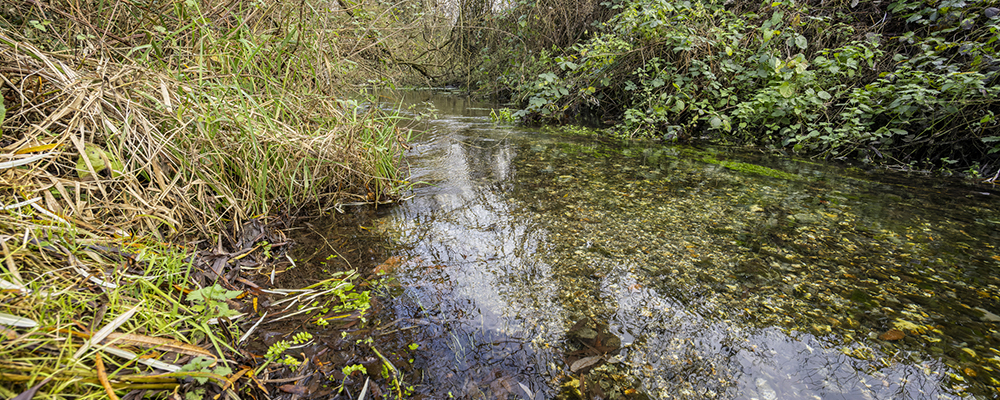
This means approximately 7,700kg of net added pollution (83% of the development load) will be permitted into the chalk streams of Norfolk, every year for the next 100 years, under the new Nature Levy, assuming all the compensation measures are delivered (a big assumption).
This dramatic drop in environmental standards is unlikely to unlock development and may increase local opposition
Developers will pay millions of pounds to Natural England, while vulnerable chalk streams decline irreversibly further, all while purporting to achieve an ‘overall improvement’ for nature by managing deer and restoring fens in nearby areas.
This is the opposite of the credible ‘offsetting’ required under our normal, globally aligned, legal frameworks, which bring legitimacy to developments, and reassure anxious communities. The price of the levy has also been knowingly discounted to be cheaper than alternative offerings to ensure uptake (para 293), so that puts the organisations cleaning up pollution to support developers pretty much out of business: An extraordinary incursion by a regulator into a market that the government says it wants to nurture.
The government rightly wanted to address the costs developers face when building new homes, but they have picked the wrong trade-off, exactly at the point when any additional pollution loads into waterways and chalk streams can cause irreversible tipping points. Worse still, the Government has persisted in disguising this as a “win win”.
For developers facing escalating construction cost inflation and other major headwinds, this dramatic drop in environmental standards is unlikely to unlock development any time soon. If adopted in its current form, they may face greater local opposition and legal challenge in water stressed and sensitive catchments, as the levy and EDP will palpably not address pollution impacts.
This could mean PFAS forever-chemical dumps in exchange for scrub clearance in a Site of Special Scientific Interest
This precedent is also dangerous. There are some in the industry who may be glad of a rejection of science in the pursuit of growth. But this is hyperscale infrastructure with a hyperscale impact that could ricochet through planning. Environmental Delivery Plans of this kind can be scrambled to remove all credible ecological legitimacy from the process.
The need to measure and mitigate harms will be replaced with an invented score-card showing an imaginary ’overall improvement’. That could mean a future of water abstraction permitted in return for new trees, or unmeasured PFAS forever chemical dumps in exchange for scrub clearance in a Site of Special Scientific Interest.
The agenda was misguided from the beginning. We need to make it the least bad as possible. The 255-page plan is open for consultation for only 28 days – closing on the morning of the 27 October 2026 – not enough time for scientific scrutiny. We need to provide feedback.
It’s in all our interests to strike the right balance for nature – if we ignore this problem, it won’t go away. And as drawn, developers will be paying for virtually nothing.
Find out more Respond to the consultation by the morning of 27 October 2026
Alexa Culver is Legal Counsel at RSK Wilding. She will be speaking about policy changes for nature at Festival of Place: Climate Resilience
If you love what we do, support us
Ask your organisation to become a member, buy tickets to our events or support us on Patreon
Sign up to our newsletter
Get updates from The Developer straight to your inbox
Thanks to our organisation members
© Festival of Place - Tweak Ltd., 124 City Road, London, EC1V 2NX. Tel: 020 3326 7238