Get updates from The Developer straight to your inbox Yes, please!




Cash-to-trash: Preserving nature is one thing voters agree on, so why is it under attack by politicians?
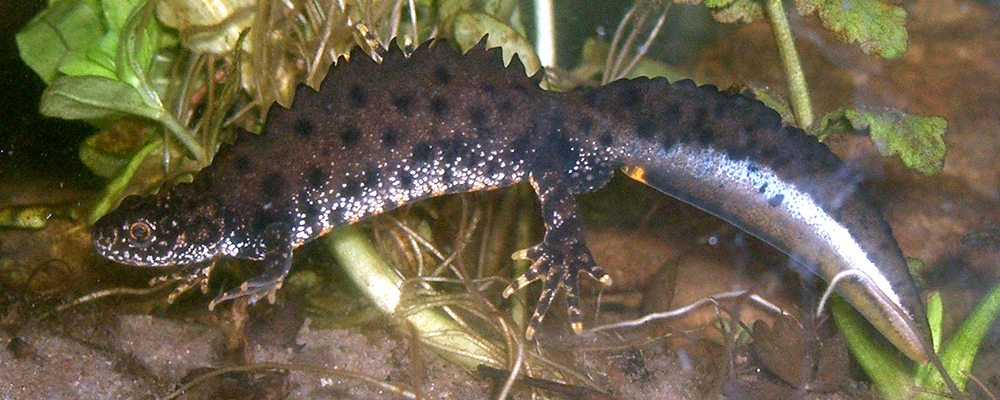
Both the Tories and the Labour party are threatening newts – and what for, asks Christine Murray. Nature conservancy and climate resilience are two things a majority of voters – from Reform to Greens supporters – want to see


“The relationship between nature and development doesn’t have to be adversarial,” Mumta Ito, campaigning lawyer and author of the UK Nature’s Rights Bill said in her talk at Festival of Place: Climate Resilience.
Ito is campaigning to enshrine nature into law as foundational to the economy and property rights – after all, without clean water, adequate food systems or air, we can’t work, let alone see long-term growth in GDP. And what is the value of property on toxic soil?
As Ito was speaking, news from the Tory conference was rolling in with Shadow Chancellor Andrew Griffith vowing to scrap both Natural England and the Environment Agency, claiming that a ‘bonfire of regulations’ would cut the price of a new-build property. Where have we heard that before?
Then Kemi Badenoch, leader of the Conservative Party, vowed to put an end to “Natural England officers with clipboards counting bats and newts.”
Pity the poor newts being dragged into the spotlight again: Secretary of State Angela Rayner promised to stop newts getting in the way of housing back in 2024 in advance of reforms to the NPPF and the Planning and Infrastructure Bill.
Indeed, a newt-killing Environmental Delivery Plan is in the works, as we heard from Alexa Culver, legal counsel at RSK Wilding in her talk at the event. That EDP is expected to follow the release of the first – out for consultation now – that tackles nutrient neutrality in Norfolk: It’s intended to unblock housing developments put on hold due to water pollution (read: sewage).
And what a smelly mess it is: The nutrient neutrality EDP for Norfolk, as Culver explained, tackles water pollution by doing nothing about water pollution. Developers would make contributions to the Nature Restoration Fund, while river pollution would continue in exchange for money towards other environmental activities, such as deer management – and by the way, the ’deer’ work will never be assessed, but assumed to have happened.
“This will mean pollution will be permitted into the chalk streams of Norfolk, every year for the next 100 years, under the new Nature Levy, assuming all the compensation measures are delivered,” said Culver.
Perhaps the next EDP will save the Great Crested Newt by endangering it further while funding a patch of roadside meadow that may not happen?
The curious fact of these policies and announcements is that nobody likes them.
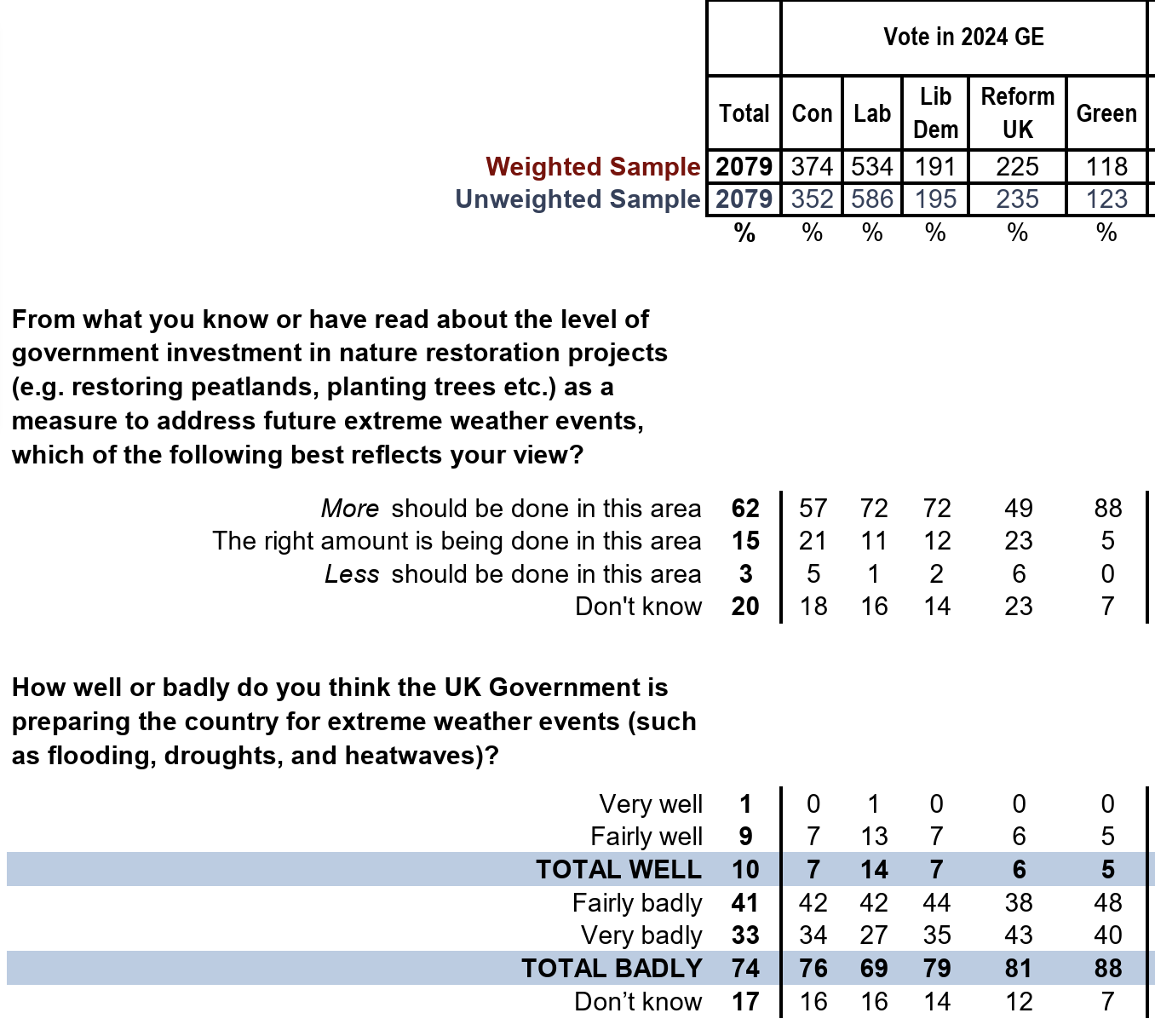
Amongst the voting public, nature conservation is universally popular. According to the Rewilding surveys conducted by YouGov, policies that support nature and counter the risks of climate change have widespread support. The latest YouGov survey – conducted in late August 2026 – shows that 57% of Conservative voters, 72% of Labour voters and 49% of Reform voters believe more should be done to restore nature and invest in projects such as peatlands and planting trees to address future extreme weather events.
Nature-killing policies are universally unpopular – so who are politicians appealing to? Is it dinosaur-donors?
Asked whether the UK government is doing enough to prepare the country for extreme weather events such as droughts and heatwaves, 76% of Conservatives, 60% of Labour voters and 82% of Reform voters said the country is very badly prepared.
So who are politicians trying to please with these policies? One thing’s for certain – it’s not the British public. Is it developers? A tug-of-war over major donors from the construction and housing industries? Is it you – professionals working in the built environment?
While I can see the appeal of streamlining standards as an analgesic to the headaches of planning, the trashing of nature will trigger compounding migraines of investment risk – nevermind the risk of public outcry dragging developers and the rest of the industry into ill repute.
As Charlotte Lyons High, Sustainability Risk Director for the Crown Estate, pointed out in her talk, climate resilience is an investment decision: The viability of developments, their insurability and long-term occupancy depend on it. The impacts of climate change are already being felt, and only collective action will ensure they don’t worsen over time.
The public wants to see action on climate resilience too – a separate YouGov poll conducted in August showed that 69% of adults in the UK are worried about climate change and its effects, while 94% would support a commitment to planting more trees in country green spaces. The majority also support bringing in stricter rules for energy efficiency in homes, such as improving insulation, better fitting doors and windows, with 70% offering their support.
If the politicians are appealing to dinosaur-developers, vocal opposition from the industry could encourage them to shift away from old fossils in favour of the growing number of environmentally enlightened organisations.
The Nature’s Rights Bill offers an elegant solution – moving the environmental considerations upstream, to be considered before planning, so that sites are already identified as appropriate for development – a pro-nature solution that is non-adversarial, collaborative, informed and intelligent.
At the end of her talk, Ito shared a sector statement in support of the Nature’s Rights Bill – a way for professionals in the audience to recognise the benefits of a stronger alignment between development, infrastructure and long-term ecological conditions. It can be signed to support the Bill to show the government that developers, architects and the wider built-environment industry cares about nature, too.
Just like the newts, perhaps it’s time to be counted.
Find out more Sign the Sector Statement in support of the Nature’s Rights Bill. Respond to the EDP consultation before 27 October. Missed Festival of Place: Climate Resilence? Become a member and attend all our events for free. All talks at the event were recorded and are available to watch (you’ll have to log in) in the Talks Library
Sign up to our newsletter
Get updates from The Developer straight to your inbox
Thanks to our organisation members
© Festival of Place - Tweak Ltd., 124 City Road, London, EC1V 2NX. Tel: 020 3326 7238