Get updates from The Developer straight to your inbox Yes, please!




What if affordable workspace was a civic requirement?
Through meanwhile use, SET is building the evidence base for creative space as essential infrastructure, Lewis Duncan reports


W hat does it really mean to “protect” commercial properties from squatters? The question conjures images of defensive measures: steel shutters, surveillance systems and legal safeguards designed to keep people out.
Yet across London, a different interpretation is quietly gaining traction: protection not as exclusion but as activation. In this reframing, an empty building is not a liability to be sealed off, but an opportunity to be responsibly inhabited and maintained.
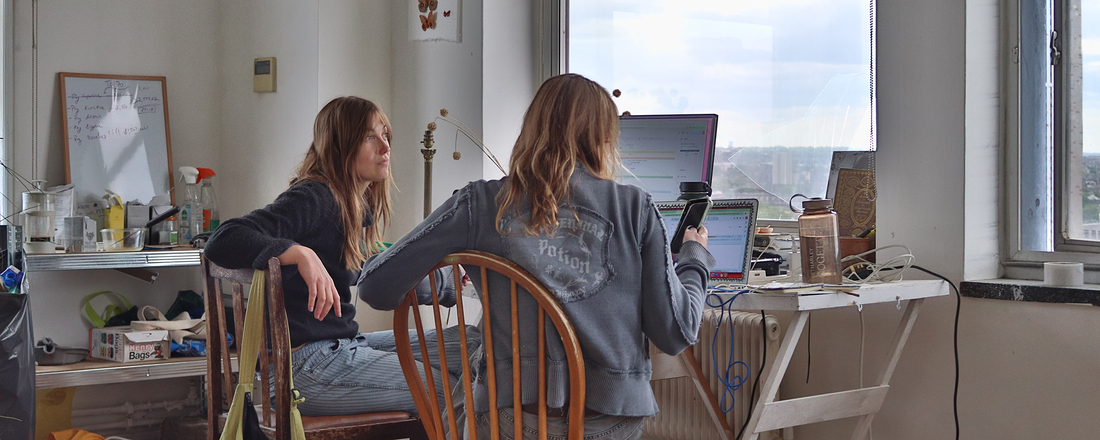
Few organisations embody this shift as clearly as SET, a London-based charity that has built a city-wide network of centres offering affordable workspace for artists, alongside a public programme of exhibitions, events and community activity.
SET’s model is not radical in its mechanics; its impact lies in its simplicity and robustness. Vacant properties are fitted with essential infrastructure: lighting, heating, basic security and partitioning to create studios, facilitated through a practical and realistic dialogue with developers and landlords.
“Ultimately, the model reframes affordable workspace as essential city infrastructure,” says Lisa Lamb, partnership and acquisition manager at SET. “Our focus is on evidence-led practice. Through our work with Oxford Brookes University, Creative Empirical, Goldsmiths and researchers at Central Saint Martins, we’re developing formal research and datasets to investigate the role that genuinely affordable cultural workspace plays in protecting, sustaining and supporting local artist communities.
The amount of vacant commercial property has increased in the wake of pandemic-era disruptions, but property owners have faced complications when turning to “guardianship”
“We do not approach meanwhile use as a temporary aesthetic or branding exercise. Instead, we view affordable artists’ workspace as an essential civic requirement that supports creative production and ensures community stability. Our ambition is to use this research to build repeatable, research-led frameworks that demonstrate how meanwhile use can be leveraged responsibly and at meaningful scale to keep artists and existing communities in the city.”
SET began its existence through squatting, but shifted to a more legally sound operation in its subsequent iterations, positioning itself squarely to provide a service for properties that needed reliable and successful meanwhile uses.
Founded in 2016 by Adrian Aldihni, Roland Antony Fischer-Vousden and Joshua Field following earlier experiments under the artist collective DIG, the organisation emerged from a direct, hands-on engagement with vacancy.
At its latest opening, SET Vauxhall, workspace is priced at £1.60 per square foot per calendar month, inclusive of utilities and Wi-Fi, with studios starting at £170 per month. Initial deposits pay for the installation of the partition walls, while rent is used to fund ongoing maintenance and builds, with many materials reused from SET’s recently closed flagship centre in Woolwich.
SET Vauxhall is based in Camelford House, a 1960s 17-storey office block owned by the Duchy of Cornwall and occupying a prime spot next to the MI6 building overlooking the Thames. It was previously known as Charity Towers because of the large number of charities based there. SET Vauxhall now shares the building with a dance studio, accounting firms and the offices of the London Philharmonic.
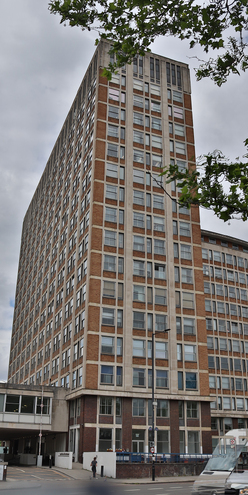
You may find yourself sharing the lift with someone in paint-splattered overalls, corporate workers in polished shoes and grey suits, or kids in tutus off to dance practice. The notion of wholly different disciplines exercising frictionless use of the spaces is evidence of the potential for a robust and energetic occupancy system in the capital.
The amount of vacant commercial property has increased in the wake of pandemic-era disruptions, but property owners have faced complications when turning to “guardianship”of vacant buildings. The 2020 court case London Borough of Southwark v Ludgate House Ltd ruled that property-owners remained liable for business rates on empty buildings with guardians. This has increased the attraction of alternative, low-risk interim uses.
At the same time, affordable workspace has been identified as a priority in the 2021 London Plan, particularly under Policy E3, which encourages developers to include creative workspaces at below-market rents. Yet delivery has often lagged behind policy ambition. SET’s model offers a way to realise these goals quickly and effectively, whether through temporary occupation during development phases or as part of longer-term placemaking strategies.
“The challenge is not a lack of buildings, it’s a lack of flexible frameworks,” says Lamb. “One of the biggest challenges is structural risk aversion across the wider property system. Delays often involve lenders, insurers and legal teams operating with different timescales. Concerns around security of tenure, in particular, can become disproportionately cautious, even where flexible models already exist. The result is that buildings can sit unnecessarily vacant simply because the system is not well designed for flexible community occupation.”
SET’s first studio project transformed a disused paint factory in Bermondsey into a thriving arts hub, housing around 100 practitioners across disciplines that included sculpture, music and performance. Though that initial site closed in 2020, the model proved replicable. Today, SET operates multiple centres across London, supporting around 1,000 artists and managing over 13,000m sq m (140,000 sq feet) of space.
By remaining within permitted use classes and avoiding major structural alterations, SET ensures that its presence does not complicate or delay eventual redevelopment.
Crucially, its model also aligns with the financial and regulatory frameworks governing property ownership. As a registered charity, SET benefits from business rates relief, reducing the burden on landlords while ensuring that buildings remain actively managed.
This management is comprehensive: fire safety compliance, insurance support, repairs and ongoing risk assessments are all handled as part of the service. SET’s occupancy of a building involves minimal external reconfiguration and no attempt to overwrite its architectural identity. Rather, its approach is to give a texture to existing space, introducing layers of use and occupation that reveal latent potential without impeding future possibilities. By remaining within permitted use classes and avoiding major structural alterations, SET ensures that its presence does not complicate or delay eventual redevelopment.
This sensitivity extends to planning processes. Increasingly, SET collaborates with councils and developers at early stages, advising on how spaces can be configured for interim or affordable use. Its experience offers a practical understanding of how to align such initiatives with Community Infrastructure Levy (CIL) relief and Section 106 agreements.
The question of value, particularly social value, is central here. How is the benefit of such interventions measured? Beyond the obvious financial savings for landlords, there are wider impacts: Supporting creative economies, fostering community engagement, and preventing the urban decay often associated with long-term vacancy. Half of SET’s studios are reserved for residents of the host borough, with the aim of feeding right back into the local community.
SET’s programming reinforces this outward-facing dimension. Tucked behind a traditional guardianship, inside an old school house in Peckham, SET Social hosts exhibitions, workshops and events. An annual £12 membership fee gives access to the large workspaces, cafe and bar. SET91, meanwhile, is the organisation’s in-house contemporary arts gallery based at 91 Tabernacle Street, Shoreditch, and also hosts talks and workshops. A short walk away, in a former keycutters and cobblers you will find SET Ceramics, a community ceramics studio with studio memberships, offering courses in throwing and hand-building.
There remains a disconnect between the flexibility required for cultural use and legal structures designed around conventional commercial leasing
Most SET studio leases are short to medium term, and members understand that relocation may be part of the cycle. At some sites, early occupants have been offered guarantees, providing a degree of stability within an inherently flexible framework. Fit-outs are planned with similar pragmatism, balancing immediate usability with the knowledge that spaces will eventually transition.
“Stability is essential,” says Lamb. “Even within temporary arrangements, non-profit organisations like SET need enough certainty and term length to invest properly in the space and ensure it remains truly affordable and local communities use it.
“For SET, unpredictability is a major challenge. A lack of certainty around timelines can force a focus on rapid occupation and financial sustainability, however, with longer leases and greater stability, we can focus on deeper community support from day one. There remains a disconnect between the flexibility required for cultural use and legal structures designed around conventional commercial leasing.”
Meanwhile use cannot substitute for long-term investment in affordable infrastructure, nor can it resolve systemic inequalities in access to space. But as a component of a wider strategy it is compelling and adaptable.
A locked, empty building may be legally secure, but it contributes little to the city around it. In contrast, a building animated through structured charitable incentives is protected and productive.
Organisations like SET demonstrate that this is a practical reality – one that challenges conventional assumptions and opens up new possibilities for how we can optimise urban stewardship to facilitate the creative output of global cities. It’s exciting, not only to see what comes from the individuals working in the SET community, but the continued fervency of mutable artistic content as it encounters unexpected urban pockets, with an agenda of inclusivity and production, versus art-washing and regeneration. If cranes and construction are a mainstay of the cityscape, then why not celebrate the DIY aesthetic by inviting in people that work best within that structure.
Lewis Duncan studied history of art at the Courtauld Institute and Goldsmiths. He works freelance in events, cooking and writing in London
Sign up to our newsletter
Get updates from The Developer straight to your inbox
Thanks to our organisation members
© Festival of Place - Tweak Ltd., 124 City Road, London, EC1V 2NX. Tel: 020 3326 7238