Get updates from The Developer straight to your inbox Yes, please!




“We’re not leaving” – Kinning Park Complex from occupation to restoration
Kinning Park Complex in the Southside of Glasgow is an exciting model for how communities and architects can work together to create significant social value on a shoestring budget, writes Nile Bridgeman


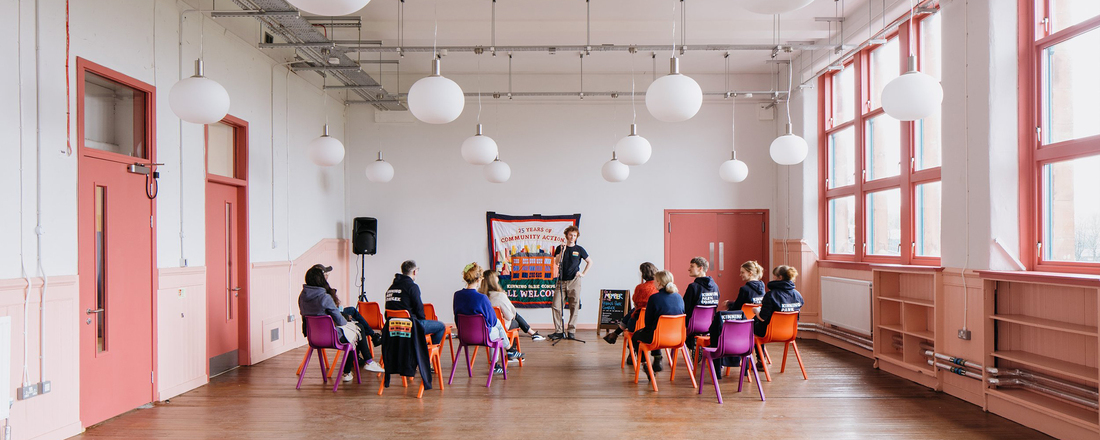
Kinning Park Complex (KPC) is a community owned building in the Southside of Glasgow, steeped with rich history; it has been an ever-changing centre for education, activism, and protecting its local community for over a century.
KPC began life in 1910 as an extension to the former Lambhill Street School. Over the years its role continued to evolve and in 1976 it became Kinning Park Neighbourhood Centre, run by Strathclyde Regional Council. The centre offered childcare, English language courses, karate clubs, coffee mornings, and a plethora of functions not readily available elsewhere to those in need of them. Despite this, the council declared it surplus to requirements on the 3rd of May, 1996 and decided to close the facility.
That day was a catalyst for those that relied on KPNC. Local mothers who relied on the building for childcare joined forces with local campaigners – including then student, and now current First Minister, Nicola Sturgeon – to say, ‘We’re not leaving’. They declared that the building belonged to the taxpayer, blocked the entrance, and occupied the building 24 hours a day for 55 days. In the end, the council handed the keys to the community for a peppercorn rent of £1 with a policy of ‘We won’t touch it, and you won’t either’.
The council’s hands-off policy meant that repairs and upkeep of the building over the next 20 years was becoming increasingly expensive; with a failing heating system, faulty electrics, rot and a leaky roof, and no way to secure the funds to fix them.
They declared that the building belonged to the taxpayer, blocked the entrance, and occupied the building 24 hours a day for 55 days
The membership agreed that ownership was the answer. Since 2017, the leadership team and local community mobilised to successfully purchase the building with the support of a new piece of legislation: The Community Empowerment (Scotland) Act 2015. Glasgow and London-based architects, New Practice, developed proposals which added weight to their winning bid to National Lottery Community Fund Scotland for £1.2 million to purchase and repair their civic asset.
New Practice worked with KPC to develop an RIBA stage 2 feasibility study; create a business development model that worked with the ebb and flow of their financial position and a low-energy strategy with an eye on increasing prices; working beyond the traditional role of architect. They came up with a design for £600,000, £1.4m and £2.2m refurb options before the level of funding was guaranteed, which helped persuade the National Lottery to cover the building’s purchase and essential works.
In March 2019, additional funding was secured from the Scottish Government’s Regeneration Capital Grant Fund, expanding the scope beyond the bare essentials, and creating the vibrant cost-effective scheme delivered by New Practice, Armour Construction Consultants, David Narro Associates and Max Fordham.
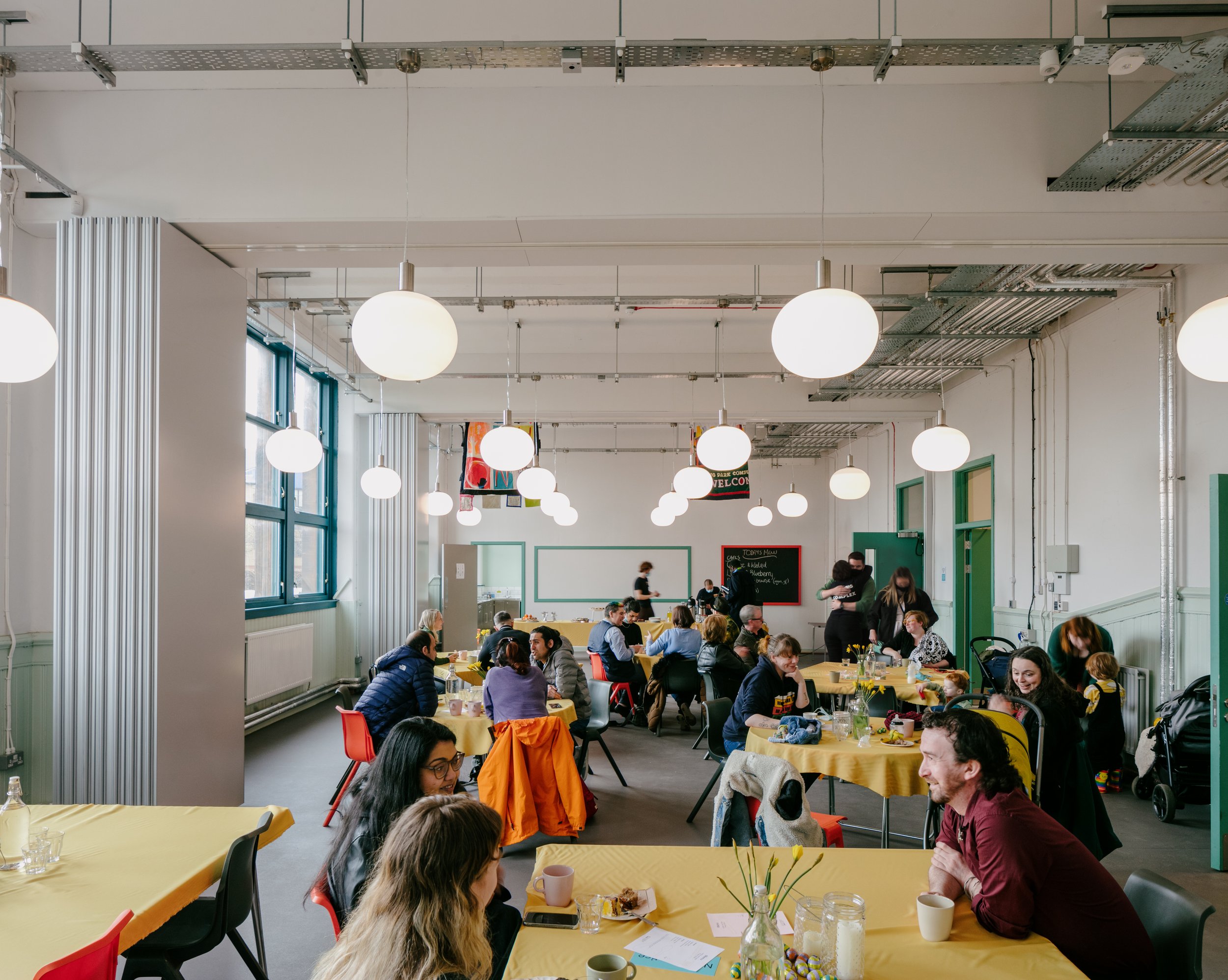
The newly reopened KPC is a multi-use community space focusing on a wide variety of activities taking place over four key strands: community, citizenship, creativity and wellbeing; strands of the building’s DNA since the early 1900s. It offers an eclectic programme of activities that welcome members, volunteers, staff, local residents and regular visitors who make up the rich mix of end-users.
For New Practice, KPC has been an exercise in slow architecture. Working with the community, they sought to create a resilient organisation, not simply a beautiful building. A central tenet of the design was to make the most of the building’s heritage and existing structure. Functional, flexible and accessible community and creative workspaces take place across all three storeys. Adaptive re-use bolstered the valuable community resources, which range from a commercial kitchen to a Socialist Sunday School.
The leadership team and community purchased the building with the support of a new piece of legislation: The Community Empowerment (Scotland) Act 2015
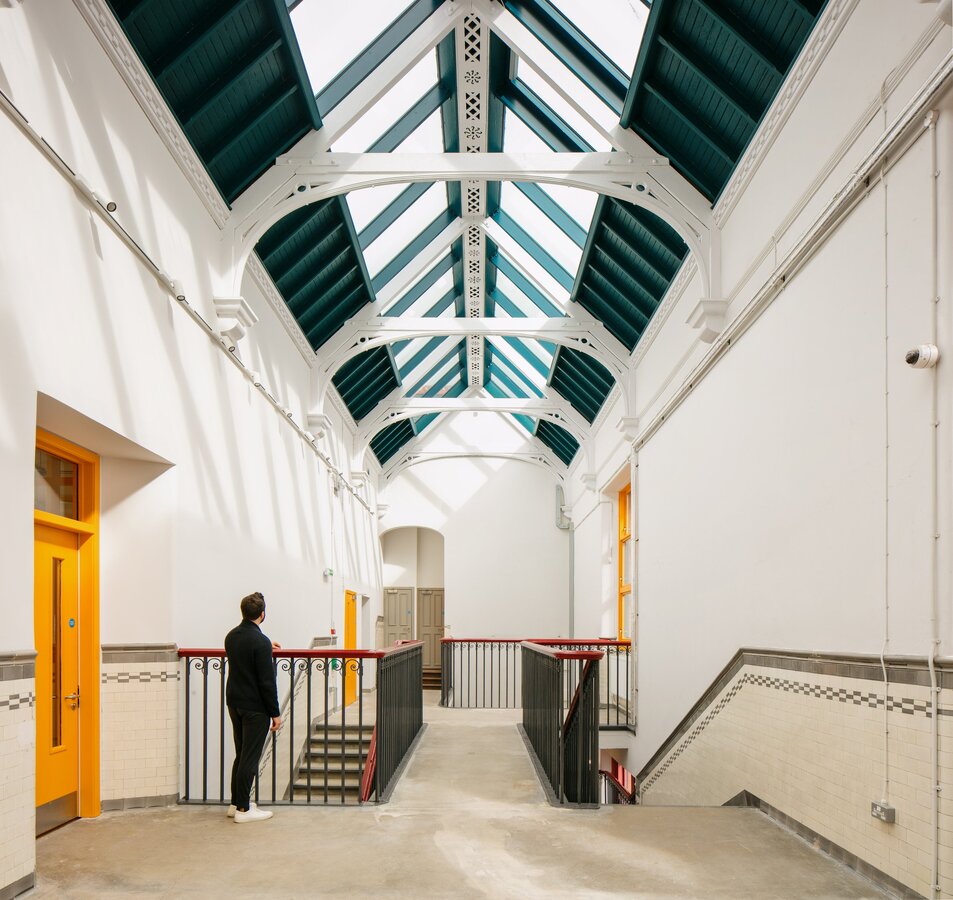
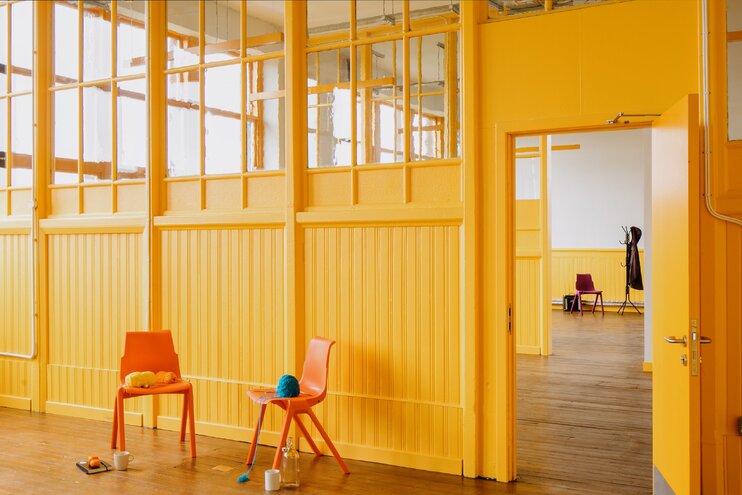
New Practice’s designs open up the original double helix stairs to aid with visibility, safety, security and access to the building. This new staircase creates opportunities for enhanced understanding of the space, allowing natural light to filter from the existing rooflight. Each of the three floors, visible from the opened atrium, use a different, bold colour to help with wayfinding: salmon pink, a yolky yellow, and a green bordering blue. With the same down-to-earth practicality found elsewhere, the paint colours are standard Dulux shades that won’t go out of stock.
KPC is a product of pragmatic decisions: every piece of furniture is repurposed or renewed, fittings can be replaced at B&Q, and even the bin-bag budget dictated the design; everything is designed to be ‘maintained on a shoestring with a single caretaker or janitor’. New Practice eked out and added to the buildings original character and grandeur with a restrained precision. In many places, they chose to not touch a thing. The outcome of this approach is one of authenticity, and a legible history.
Talking about this ethos, Becca Thomas, Creative Director at New Practice shared that “our architectural approach responds to [KPC’s] variety, centring accessibility and heritage to ensure longevity. In handing over the keys we have taken the next step, I am thrilled to be onsite and to continue our efforts to redevelop in a way that recognises all this building’s stories, and through reuse retains the very atmosphere that has made it home to many.”
“Over the last 25 years, many people have worked hard to keep the building operating, making sure it was just good enough for use,” shared Racheal Smith, Kinning Park Complex’s Lead of Operations, who began working there as a volunteer. “Kinning Park Complex has always been a great resource, even when it was cold, wet and broken. Now, with the redevelopment complete, our communities can be part of building a future that is here for generations to come.”
KPC is a product of pragmatic decisions: every piece of furniture is repurposed or renewed, fittings can be replaced at B&Q, and even the bin-bag budget dictated the design
KPC is a valuable and necessary example of how to add character without expensive architectural tricks. New Practice took a degraded historic building and meagre budget, and created an intricate series of inclusive, loose, yet beautiful spaces that are fit for purpose and brimming with character.
Combining that with helping secure the funding, procure the project and create a resilient business model for their clients elevates it to a rare place: a unique and exciting prototype for how architects and designers may work with communities in creating truly collaborative civic architecture.
If you love what we do, support us
Ask your organisation to become a member, buy tickets to our events or support us on Patreon
Sign up to our newsletter
Get updates from The Developer straight to your inbox
Thanks to our organisation members
© Festival of Place - Tweak Ltd., 124 City Road, London, EC1V 2NX. Tel: 020 3326 7238