Get updates from The Developer straight to your inbox Yes, please!




Wan Chai Connect, Wan Chai, Hong Kong for Public-Private partnership with DCMSTUDIOS Architects, urban designers Hong Kong and Buro Happold
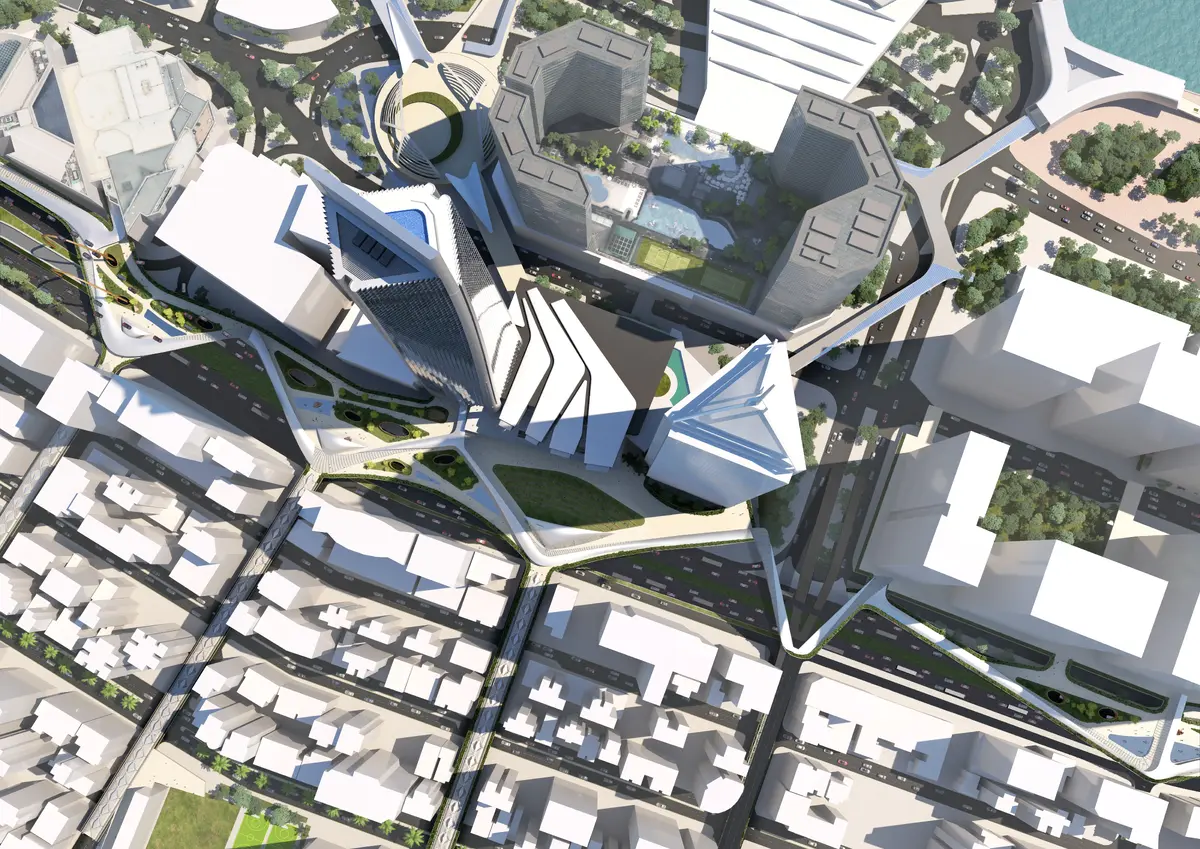
Wan Chai Connect, Wan Chai, Hong Kong for Public-Private partnership with DCMSTUDIOS Architects, urban designers Hong Kong and Buro Happold
This redevelopment will add 24,000 m² of new convention and exhibition space over three levels to the existing Hong Kong Convention and Exhibition Centre (HKCEC), increasing capacity by 35%. A new 100-storey tower will provide 200,000 m² of Grade A office space across 80 floors, accommodating up to 17,000 workers. Also included is a 20-floor, 50,000 m² 5-star hotel with 500 rooms. Together, these buildings establish a new centre of gravity in Wan Chai, generating pedestrian traffic far beyond the capacity of current, inadequate footbridge and pedestrian link systems.
Describe the context of this project, its neighbourhood and people.
Wan Chai’s urban landscape has been profoundly shaped by more than a century of land reclamation, leading to a distinct separation between its southern and northern precincts. Gloucester Road, an eight-lane highway running east-west, presents a significant physical and psychological barrier, disrupting pedestrian movement and the social connectivity that characterizes successful urban environments. This division has exacerbated challenges for residents and visitors, with pedestrian infrastructure such as the O’Brien Road high-level walkway heavily congested, accommodating 18,000 pedestrians per hour during peak times but offering limited access to the new waterfront park stretching from Wan Chai to the central ferry piers.
The existing footbridge links are not only unattractive but also unevenly distributed, which compounds the issue of accessibility. The upcoming redevelopment marks a pivotal moment for Wan Chai’s transformation. The demolition of three government towers along Gloucester Road and the Kwong Wan Fire Station paves the way for a landmark expansion of the Hong Kong Convention and Exhibition Centre (HKCEC), introducing approximately 23,000 m2 of new facilities including a 5-star hotel and a Grade A office tower. Beyond the buildings themselves, there is a coordinated strategy to revamp the footbridge network to enhance connectivity between Wan Chai, Admiralty, and key transport nodes, facilitating smoother pedestrian flows and fostering greater integration within the wider urban fabric. This project offers a carefully calibrated response to long-standing spatial and social fragmentation, positioning Wan Chai for a more accessible, vibrant and cohesive future.
Please describe your approach to this future place and its mix of uses. How will it function as a vibrant place? How does it knit into and serve the needs of the wider area?
The transformative vision at the core of WanChai Connect’s masterplan is a 3.3-hectare elevated linear park spanning 770 meters above Gloucester Road, ingeniously repurposing previously underutilized space into a bustling civic destination. This park serves as a green artery that threads through the urban fabric, designed to nurture social interaction, cultural engagement, and community wellbeing. A perforated surface design allows natural light and ventilation to reach the highway below, enhancing environmental performance while creating a comfortable atmosphere for visitors. Complementing the infrastructure, the park features diverse elements including venues for live performance and public art installations that enhance cultural vibrancy, alongside tranquil landscaped gardens, water features, and architectural pavilions that invite discovery and reflection. Its multifunctional nature supports diverse uses throughout the day: from early morning Tai Chi practice and mid-day breaks for office workers to evening joggers and event attendees, generating rhythmic activity that animates the space. The adjacency to the redeveloped convention and exhibition facilities strategically integrates business, leisure, and the public realm.
Spacious ground-level lobbies and drop-off zones foster welcoming access, while elevated concourses and balconies overlooking a central amphitheater create strong visual and physical connections that draw people into the park. Altogether, these features weave the new park more deeply into Hong Kong’s urban narrative, creating a new social and civic focal point that is both locally rooted and globally resonant.
What is the social and environmental impact of the project? For example, how will the carbon use and material impact of the development be mitigated? What is the sustainability strategy? How will this future place contribute to the economic, environmental and social wellbeing of its citizens?
At the heart of WanChai Connect is a commitment to sustainability that transcends typical green infrastructure benchmarks by knitting together ecological, social, and urban layers into a resilient urban ecosystem. The project introduces 3.5 hectares of green public realm that works dynamically to mitigate Gloucester Road’s canyon effect, improving microclimatic conditions like temperature regulation and air quality, which enhances pedestrian comfort and usability. This new green lung supports biodiversity by establishing habitats for native flora and fauna, contributing to the ecological health of the district.
Beyond environmental gains, the green infrastructure shapes daily choices, making walking and cycling more attractive options through enhanced safety, comfort, and visual interest, fostering a culture of active transportation with health and social benefits. The project also elevates community cohesion by creating lively shared spaces that welcome diverse users and activities, fostering social interactions and cultural expression vital to place identity. Economically, the upgraded environment catalyzes inward investment by signaling high-quality, forward-thinking urbanism that appeals to businesses and residents alike. The park exemplifies how sustainable design principles can generate holistic value, strengthening environmental resilience, boosting social vitality, and enhancing economic prospects, positioning Wan Chai as an exemplar for progressive urban regeneration.
Sign up to our newsletter
Get updates from The Developer straight to your inbox
Thanks to our organisation members
© Festival of Place - Tweak Ltd., 124 City Road, London, EC1V 2NX. Tel: 020 3326 7238