Get updates from The Developer straight to your inbox Yes, please!




Tileyard North, Wakefield for City & Provincial Properties Ltd. with Hawkins\Brown, Civic, Turley and TB&A
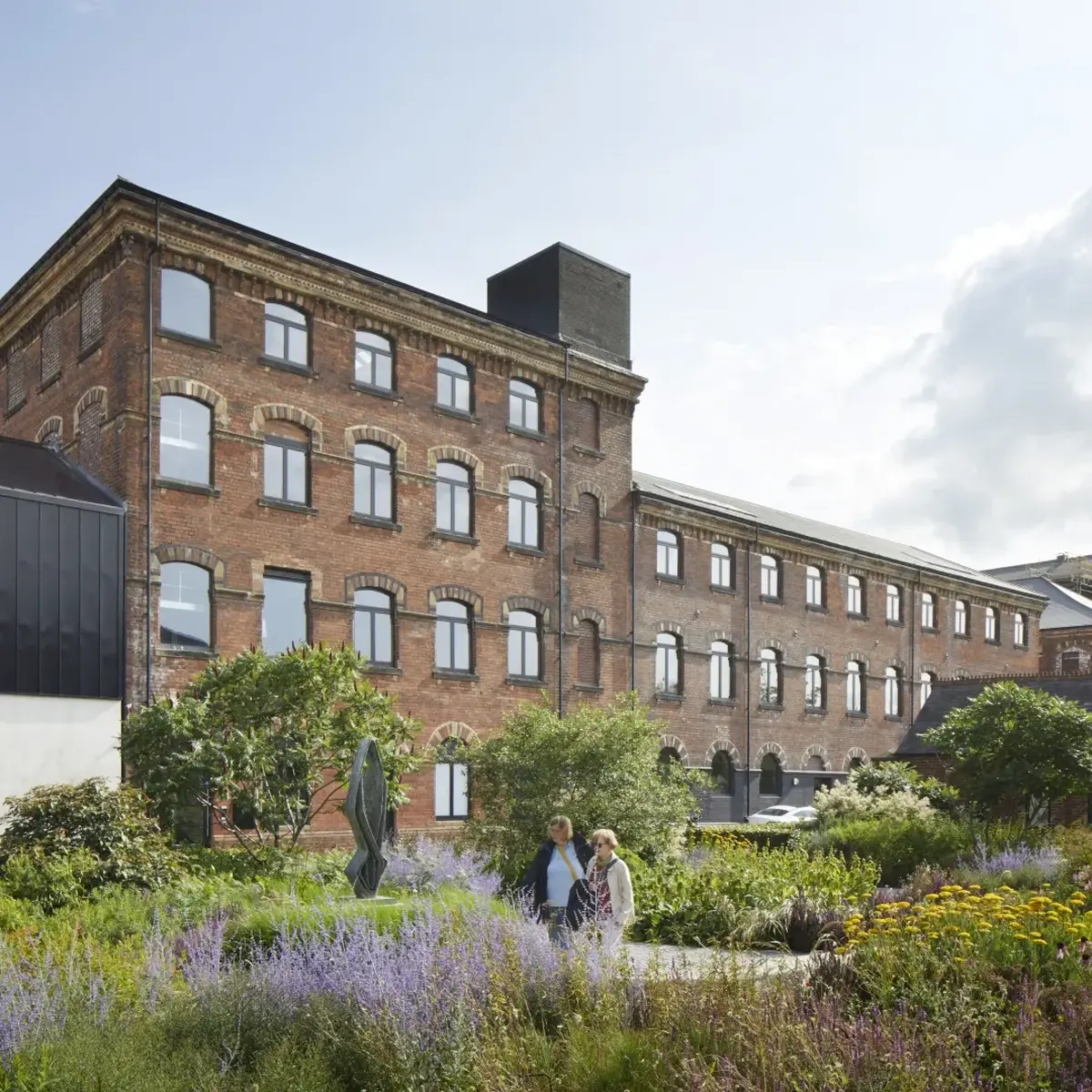
Tileyard North, Wakefield for City & Provincial Properties Ltd. with Hawkins\Brown, Civic, Turley and TB&A
Tileyard North is the final piece of a regeneration masterplan breathing new life into Wakefield’s waterfront, converting several long-derelict Grade II-listed mills into a world-class mixed-use creative and cultural cluster. The fully occupied Phase 1 reimagines four mill buildings, creating a new public square that accommodates a wide range of uses, including recording studios, an event space, and a gin distillery. With construction recently complete, Phase 2 will add a hotel, NHS-occupied workspace and a restaurant with a riverside pier.
Describe the context of this project, its neighbourhood and people.
At 1.25 hectares (135,000 sqft), Tileyard North is the UK’s largest creative industries hub outside London and transforms a long-forgotten industrial liability into a valuable asset for Wakefield, West Yorkshire. Our brief was to provide a home for a music-centred creative campus, one which could bring new life to the derelict Rutland Mills complex on the banks of the River Calder.
Rutland Mills was built in the 1870s by industrialist Isaac Briggs, and a worsted spinning mill operated on the site, with some interruptions, for almost a century. However, the last mill operations on the site ceased in 1970, leaving the listed mill buildings to fall into disrepair. The derelict site formed a barrier between the city centre and the surrounding residential areas. As such, one of the key drivers was to improve connectivity between the two and provide an accessible amenity to the wider community.
The area’s post-industrial regeneration was kick-started by the arrival of the Hepworth Wakefield in 2011, which occupies the site directly adjacent to Rutland Mills. The brief for Tileyard North asked for the project to fill in the ‘missing piece’ of Wakefield’s waterfront, creating a campus that positively links the gallery to the wider waterfront, both spatially and programmatically. The complex is now home to a plethora of small businesses, a distillery, podcasting suites, music recording studios, a café, and a 400-capacity events venue. Phase 2, which has recently been completed, will add a hotel, workspace, and a restaurant with a riverside pier.
Describe the intervention you’ve made including its purpose and motivation. Please explain the governance of the project, describing its viability and any consultation and community engagement undertaken.
Tileyard North was jointly delivered by Wakefield Council and City Provincial Properties, who were keen to create a brief that would allow access to the site to be returned to the community. Both the brief and programme for the site were developed through a dialogue with the adjacent Hepworth Wakefield gallery and the wider Yorkshire Sculpture Triangle, and via presentations to local organisations such as the Wakefield Civic Society.
The project was delivered in phases to align with funding milestones. Initial works focused on viability and heritage appraisals to determine which buildings could be retained and adapted. Planning constraints required careful integration of modern services, with exposed MEP systems designed for both aesthetics and ease of maintenance. The base build was intentionally flexible, allowing for varied fitouts including recording studios, commercial workspaces, and public amenities. The designs were developed in consultation with the Hepworth Wakefield, Historic England, Wakefield City Council and other local stakeholders in a series of community engagement events held at the Hepworth, Calder Gallery (within Rutland Mills), and other venues in Wakefield. Tileyard North now plays host to a wide range of public-facing events in conjunction with The Hepworth in a more informal and accessible setting, inviting the wider community into events ranging from ceramics fairs to Christmas markets.
How does this project make use of an existing structure, place or building in a creative way? Is it innovative? How will this project continue to evolve or enable future flexibility and adaptation? Have you considered its resilience?
We retained and celebrated as much of the existing fabric as possible, intervening only where necessary. The brief was shaped in dialogue with the buildings, allowing the right uses to be hosted in the right places and minimising impact. Heavy brick arches and clinker floors provided excellent acoustic muffling for recording studios, while the open-plan carding shed made a perfect events space. Approximately 80% of the existing built fabric was retained, significantly reducing embodied carbon. Where new materials were required, innovative solutions were adopted, such as polycarbonate for reinstating north-facing roof lights on the carding shed—balancing weight restrictions with modern servicing and thermal performance. We undertook a detailed analysis of each of the existing buildings to determine their condition and suitability for repurposing. Connections to the wider context, active frontage, public realm, north-south and east-west routes through the site were all deemed to be key to the scheme. Three of the existing buildings were demolished to allow for a high-quality new building that better encloses the courtyard and defines gateways to Bridge Street and Navigation Walk. There is a clear distinction between new interventions and the existing fabric, referencing original materials and architectural language, while avoiding pastiche. This legibility ensures the history of the building is clearly read and understood. Existing openings were reused wherever possible, with new openings kept to a minimum. Many of the later adaptations have been retained and incorporated into the final design, adding character and acknowledging the technological and functional evolution of Rutland Mills.
Sign up to our newsletter
Get updates from The Developer straight to your inbox
Thanks to our organisation members
© Festival of Place - Tweak Ltd., 124 City Road, London, EC1V 2NX. Tel: 020 3326 7238