Get updates from The Developer straight to your inbox Yes, please!




Space House, London Borough of Camden for Seaforth Land and QuadReal with Squire & Partners, Atelier Ten, Pell Frischmann, Donald Insall Associates, Gustafson Porter & Bowman, Gardiner & Theobald and BAM
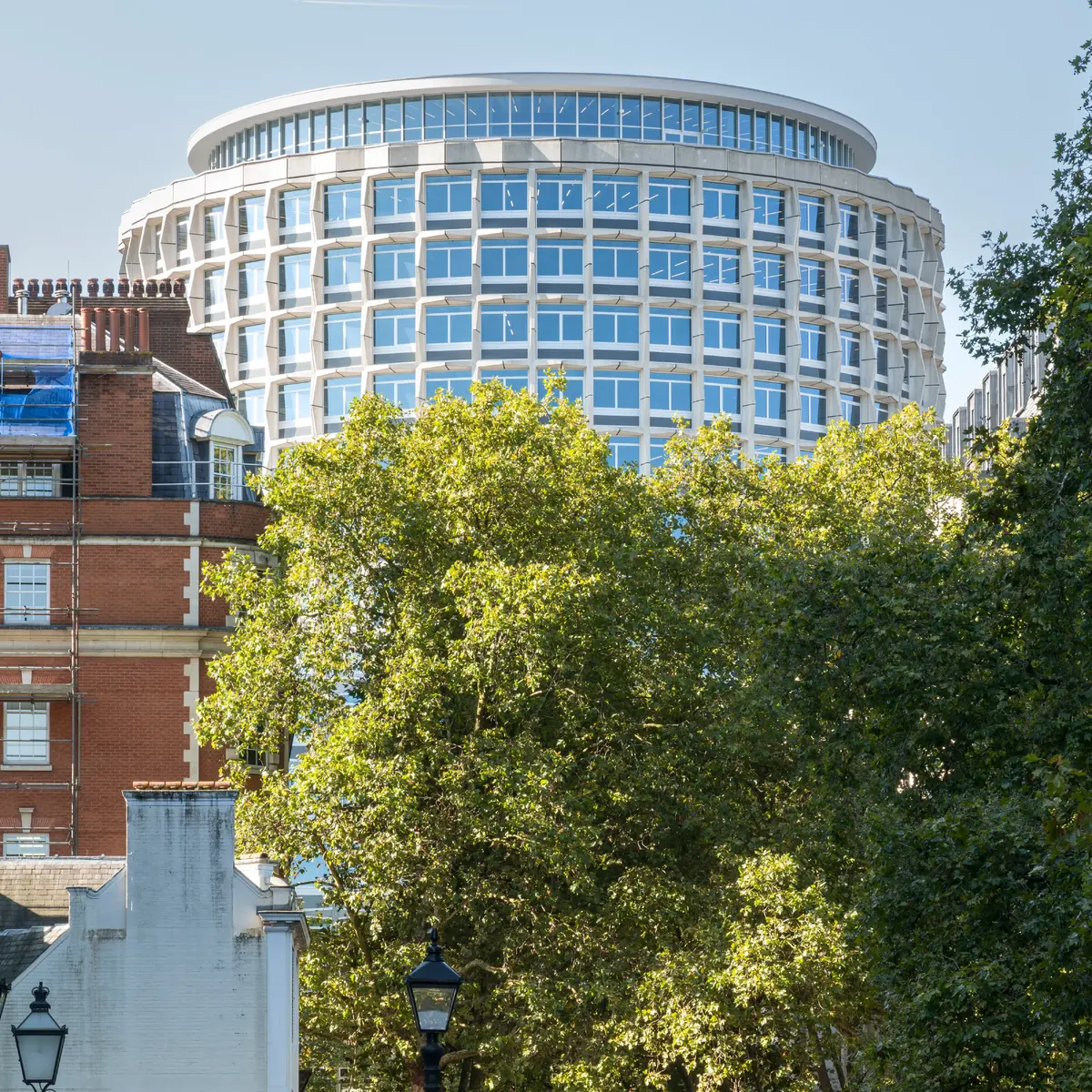
Space House, London Borough of Camden for Seaforth Land and QuadReal with Squire & Partners, Atelier Ten, Pell Frischmann, Donald Insall Associates, Gustafson Porter & Bowman, Gardiner & Theobald and BAM
The iconic Grade II-listed Space House has been sensitively refurbished and extended by Squire &Partners for Seaforth Land and QuadReal. A symbol of the 1960s commercial property boom, Space House was designed by Richard Seifert and Partners and is known for its innovative architecture, with a distinctive cylindrical tower, rectilinear block and connecting bridge.
Describe the context of this project, its neighbourhood and people.
Occupied solely by the Civil Aviation Authority until 2019, Space House was refurbished in 1996 and 2003. Twenty years on, the new owner sought a multidisciplinary team capable of responding to an ambitious brief: to save, preserve and enhance the landmark building, allowing communities to enjoy, work and socialise in and around its outstanding twentieth-century architecture for years to come. Once closed off and accessible only to office tenants, Space House now opens its doors to the wider public for private and public events, reshaping perceptions of workplace development while preserving 90% of the original structure and restoring important original features for all to enjoy.
Space House demonstrates how the adaptive reuse of a historic building can deliver lasting civic value, preserving architectural heritage while creating a sustainable, inclusive and vibrant community hub. Through sensitive restoration, it has become a landmark of civic contribution in Covent Garden, enriching its social, cultural, economic and environmental fabric, supported by independent retailers, restaurants and flexible event zones. In reimagining the workplace, Space House anticipates the evolving possibilities of integrating civic and commercial spaces and encapsulates the needs of tomorrow’s occupier. Adaptable floorplates offer flexible configurations for a wide range of uses, while open planning, abundant natural light, communal areas and state-of-the-art amenities foster collaboration. At ground level, a reconsidered, accessible public realm offers a lively experience: a public piazza, landscaping, food trucks, festive activations and outdoor seating allow workers and visitors alike to enjoy the building’s architecture and al fresco spaces.
Describe the intervention you’ve made including its purpose and motivation. Please explain the governance of the project, describing its viability and any consultation and community engagement undertaken.
A commitment to community shaped every stage of the Space House project. The site had been fenced off and rendered impermeable, and this loss of public realm created a hostile, disconnected, and unsafe environment that blocked key pedestrian routes and denied the area opportunities for civic use, placemaking, and urban enjoyment. The interventions aimed to transform it into a vibrant ‘third place’ that harmonises heritage preservation with public access, sustainability, and social value. Grade II-listed in 2015 as one of the UK’s finest examples of mid-century Modern Brutalism, this designation introduced additional challenges during the design process. Many original drawings had been destroyed, leaving gaps in documentation and requiring the project team to reconstruct knowledge through fragmented photographic archives and on-site investigation. The opportunity for Space House’s full refurbishment demanded passion and drive, re-establishing the building much closer to its documented design intent than its as-built condition. With 90% of the original structure meticulously restored and retained, and two new floors added to the Tower, Space House reinstates Seifert’s intended crisp roofline silhouette. Careful planning and phased delivery ensured financial and operational viability throughout the project, achievable only through a collaborative multidisciplinary team working in harmony with local government and expert bodies to preserve, upgrade, and enhance the local built environment. The developer and building owner led a proactive consultation programme with local stakeholders and heritage bodies, including Historic England and Twentieth Century Society. Feedback was actively incorporated throughout the project, ensuring the refurbishment met both community and heritage expectations.
How does this project make use of an existing structure, place or building in a creative way? Is it innovative? How will this project continue to evolve or enable future flexibility and adaptation? Have you considered its resilience?
A case study in sustainable, heritage-led transformation, Space House demonstrates a replicable model for the innovative adaptive reuse of existing buildings. Heralded as ‘one of the most important redevelopment projects of our time’ by Historic England, the refurbishment leverages the building’s Grade II-listed heritage to prolong its life while introducing contemporary interventions that respect its legacy. Original, striking features have been preserved and celebrated, while modern upgrades enhance functionality, sustainability and public engagement. Creative interventions include transforming car-centric spaces into active, community-focused areas: the underground car park now provides cycle storage for 600 bikes with end-of-journey facilities, and the former petrol station canopy has been reimagined as the Filling Station restaurant, activating street level and opening the building to the public. The cylindrical tower’s geometry and structural grid informs the design, offering 360-degree views and a strong spatial connection to its surroundings. Public access is further embedded through participation in the London Festival of Architecture, Open House Festival and other industry events.
The refurbishment prioritises adaptability and future flexibility. Removal of unnecessary finishes and the careful design of interior layouts allows tenants to customise spaces, supporting evolving uses over time. High-performance building systems, sustainable energy solutions and resilient materials ensure the structure can meet changing environmental standards, extend its lifespan and remain relevant for decades. An optimistic, human-centric alternative to today’s commodity-led office buildings, Space House demonstrates how older structures can be creatively modernised and future-proofed, balancing heritage preservation with flexible, sustainable and socially valuable spaces.
Sign up to our newsletter
Get updates from The Developer straight to your inbox
Thanks to our organisation members
© Festival of Place - Tweak Ltd., 124 City Road, London, EC1V 2NX. Tel: 020 3326 7238