Get updates from The Developer straight to your inbox Yes, please!




Old Court and Weaving Sheds, Kidderminster for Wyre Forest District Council with Burrell Foley Fischer, DCA Consultants, AKS Ward, SGA Consulting, Arcadis and Focus Consulting
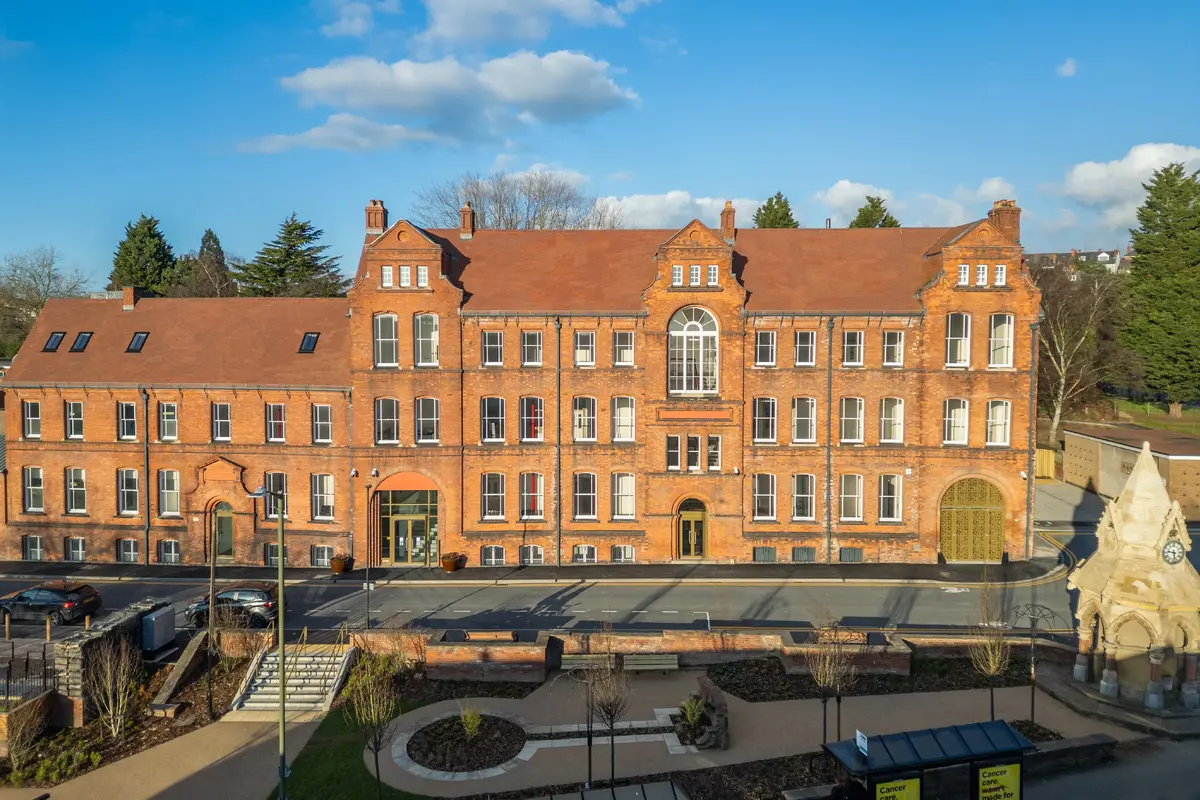
Old Court and Weaving Sheds, Kidderminster for Wyre Forest District Council with Burrell Foley Fischer, DCA Consultants, AKS Ward, SGA Consulting, Arcadis and Focus Consulting
The transformation of Kidderminster’s Grade II listed Former Magistrates’ Court has brought a once-derelict gateway site back to life as a thriving hub for enterprise, creativity and community activity. Led by Wyre Forest District Council with support from the Future High Streets Fund, the project reopens a cherished historic landmark while equipping it for modern use.
Describe the context of this project, its neighbourhood and people.
The restoration of the Grade II listed Former Magistrates’ Court has reactivated a long-neglected gateway into Kidderminster, re-establishing the site as a civic anchor at the heart of the town centre. The surrounding neighbourhood historically shaped by the carpet industry has experienced decades of decline, resulting in reduced footfall, vacant premises, and socio-economic challenges. Prior to redevelopment, the building stood derelict for over a decade, attracting antisocial behaviour and contributing to a sense of neglect in a highly visible location. Originally built in 1878-79 for the prominent Brussels carpet manufacturer R.J. Willis, the building served as offices and a showroom before later housing the Magistrates’ Court and indoor market. Its users reflected successive phases of Kidderminster’s industrial, civic and commercial life, but by the mid-2000s it no longer served contemporary community needs. The redevelopment, championed by Wyre Forest District Council and supported by the Future High Streets Fund, has brought the site back into use as The Old Court and The Weaving Sheds; a vibrant hub for creative, digital and community activity. Today, the building accommodates local businesses, entrepreneurs, start-ups, innovation programmes, and community groups. The weaving sheds now host workshops, performances and public events, reconnecting residents with a significant part of the town’s industrial heritage. Through sensitive conservation and purposeful reinvention, the project has transformed a declining asset into an inclusive, accessible and economically active destination. It now plays a vital role in strengthening community pride, supporting local enterprise and contributing to the broader regeneration of Kidderminster.
Describe the intervention you’ve made including its purpose and motivation. Please explain the governance of the project, describing its viability and any consultation and community engagement undertaken.
The project was conceived to address a strategic challenge: an architecturally significant but rapidly deteriorating landmark at a key approach to Kidderminster. Wyre Forest District Council recognised both the heritage value and the opportunity to re-purpose the site to support economic renewal, creative industries and greater community participation in the town centre. The intervention focused on restoring the building’s historic integrity while completely rethinking its use. Led by Burrell Foley Fischer Architects, the project team delivered a comprehensive scheme combining heritage conservation, new interventions, upgraded public realm and improved connectivity with the wider town centre. Governance centred on robust viability testing and long-term sustainability. Business planning, extensive market research and financial modelling ensured that the project could operate without ongoing subsidy, with a diversified tenant mix and flexible spaces designed to evolve with future needs. Capital funding was secured through the Future High Streets Fund, supported by Local Authority investment and transparent oversight through formal council governance processes. Public consultation shaped both the vision and design, with workshops, exhibitions and engagement sessions revealing a strong desire for improved public realm, accessible community spaces, and celebration of the town’s industrial past. Feedback directly influenced the project’s priorities, including permeability, safety, inclusivity and the creation of a high-quality venue for creative enterprise. The project forms part of a wider, co-ordinated regeneration strategy delivering linked destinations across the town centre. Together, these interventions improve movement, create new opportunities and set the foundation for future residential, commercial and cultural development.
How does this project make use of an existing structure, place or building in a creative way? Is it innovative? How will this project continue to evolve or enable future flexibility and adaptation? Have you considered its resilience?
The project demonstrates a highly creative and innovative approach to adaptation, transforming the Former Magistrates’ Court and weaving sheds into flexible, future-ready spaces while retaining the distinctive industrial character that defines Kidderminster’s heritage. The Old Court now provides 1,800 sqm of high-quality workspace, event rooms and collaboration areas, designed to accommodate a wide range of tenants and uses over time. The former court chamber, previously dark and enclosed, has been reinvented as a light-filled conference venue, preserving original features while equipping the space with contemporary technology and infrastructure. The north-lit weaving sheds, once hidden and damaged, have been meticulously restored. Their cast-iron columns and rare fish-belly tie beams, locally manufactured and of significant historic value, are now celebrated as part of a versatile events and creative industry venue. This intervention not only preserves an important industrial typology but reinterprets it for public benefit, enabling performances, exhibitions, markets, workshops and community gatherings. Flexibility and resilience underpin the entire scheme. Spaces are designed for multiple configurations, future reallocation, and evolving market demand. New building services, energy-efficient systems and improved fabric performance reduce operational costs and environmental impact, supporting long-term viability. The project strengthens community resilience by providing accessible spaces for enterprise, innovation and cultural activity, supporting diverse users and fostering collaboration. Infrastructure upgrades and durable materials ensure longevity, while the restored weaving sheds remain adaptable for new technologies and future economic shifts. This reimagining of heritage assets ensures the building will continue to evolve with Kidderminster’s changing needs.
Sign up to our newsletter
Get updates from The Developer straight to your inbox
Thanks to our organisation members
© Festival of Place - Tweak Ltd., 124 City Road, London, EC1V 2NX. Tel: 020 3326 7238