Get updates from The Developer straight to your inbox Yes, please!




Nairobi Central Station, Nairobi, Kenya for the Kenya Railway Company with AtkinsRéalis, Howard Humphreys and Mace
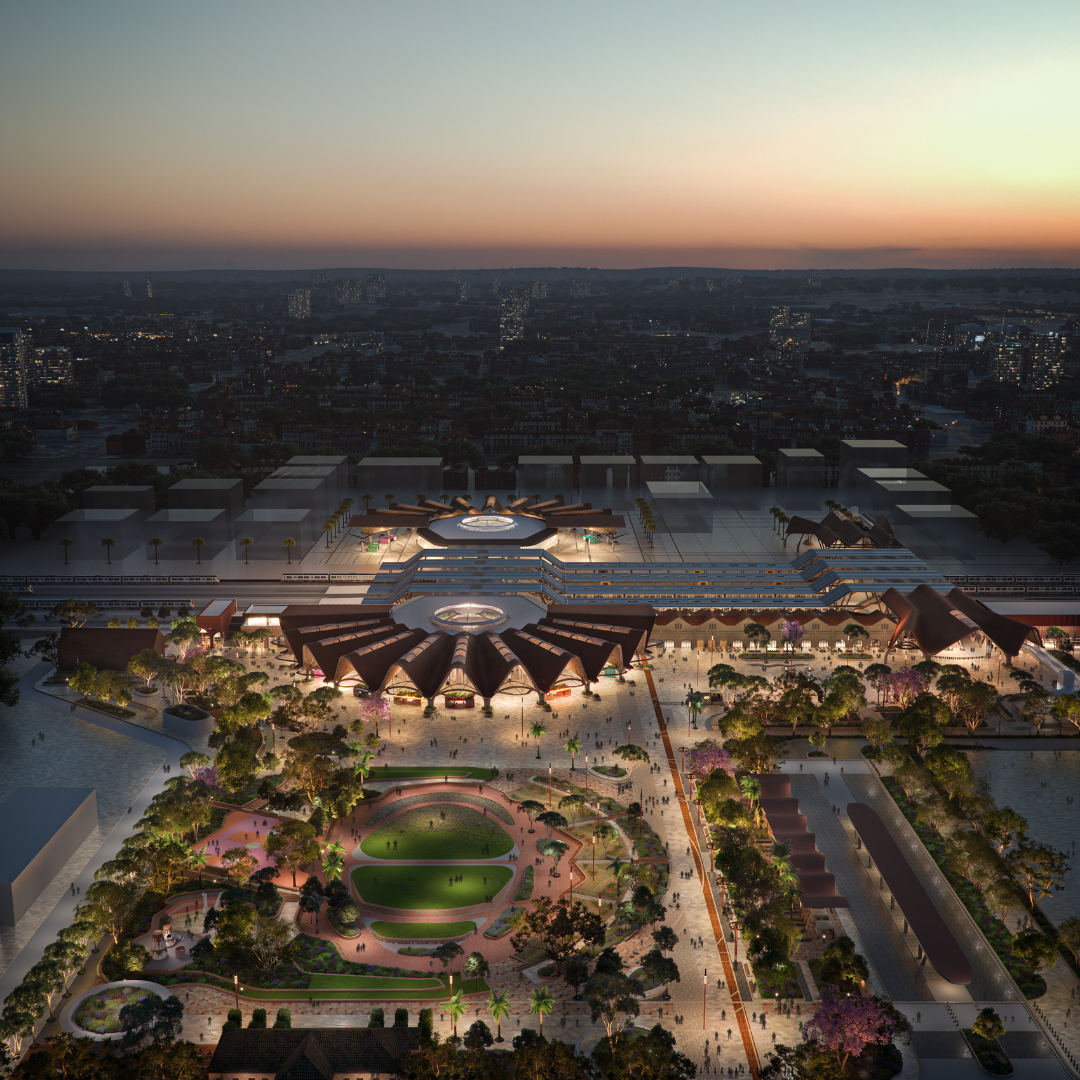
Nairobi Central Station, Nairobi, Kenya for the Kenya Railway Company with AtkinsRéalis, Howard Humphreys and Mace
Nairobi Central Station is the heart of Railway City—a visionary urban regeneration project transforming 170 hectares into a vibrant, transit-oriented hub. The station design blends heritage with the modern outlook for Nairobi, accommodating up to 30,000 passengers per hour. Inspired by Kenya’s cultural “Boma,” it offers a welcoming public realm that stitches into the city’s urban fabric. Sustainability has been integrated throughout the design with rainwater harvesting, biophilia and climate adaptation.
This is Nairobi’s new front door—an iconic gateway to East Africa’s future.
Describe the context of this project, its neighbourhood and people.
Nairobi is a unique city established in 1899 that grew from the establishment of the rail network running from Uganda to the port of Mombassa. Now the capital of Kenya the city includes a National Park within it’s borders, an established colonial grid structured CBD and a sprawling urban expansion of vibrant districts with street markets and commercial spaces.
Nairobi Central Station (NCS) sits at the heart of the city, on the crossroads between the CBD and the vibrant eastern districts. Nairobi has a population of over 4 million people and encounters many environmental, social and economic urban challenges including:
• Water management with flash flooding in the winter and droughts in the summer.
• Restrictions on access to water.
• High volumes of pedestrian and vehicular traffic.
• Lack of access to public and amenity space within the city.
• Public safety and security issues.
• Limited access to public facilities and public transportation.
NCS is currently an under utilised station with a large adjoining brown field site. The site sits at the crossroads of Moi Avenue and Haile Selassie Avenue that separate the CBD to the west from the vibrant districts to the east. The train line severs pedestrian connection between the city centre in the north and the residential districts to the south. The upgrade to NCS offers the opportunity to reconnect the districts across the city, to act as a catalyst for regeneration and to provide an iconic gateway for business in East Africa.
Please describe your approach to this future place and its mix of uses. How will it function as a vibrant place? How does it knit into and serve the needs of the wider area?
Nairobi Central Station: A Place for People and Nature
Our vision is to create a modern-day ‘Boma’—a culturally significant meeting place—where Nairobi’s people and nature come together in the heart of the city. The station’s iconic architecture features a sweeping, free-flowing roof that shields passengers from heavy rain and heat while harvesting rainwater to support the city during floods and droughts.
The Boma Park welcomes people in, offering one of Nairobi’s few free-to-use green spaces within the city. With unique play areas, art installations, feature lighting, a mix of seating, open lawns and public squares surrounded by eateries and cultural facilities, it creates a vibrant destination for leisure and community engagement. The park also acts as a sponge; during the wet seasons and utilises the water from the station rain water harvesting in the dry seasons. It is a place that serves the city culturally, environmentally and socially.
Railway Square celebrates Nairobi’s railway heritage through its detailing and finishes. Acting as a civic arrival point and transport interchange, it weaves the station into the urban fabric of the city’s districts. Its active edges host retail, dining, and seating overlooking a flexible event space for vibrant year-round activities.
People’s Walk provides a direct pedestrian link between the station, the CBD, and eastern districts, knitting together Moi Avenue and Haile Selassie Avenue—the city’s crossroads.
This transformative design blends culture, sustainability, and connectivity, creating an inclusive urban hub that enhances mobility, fosters community, and delivers a landmark gateway for Nairobi’s future.
What is the social and environmental impact of the project? For example, how will the carbon use and material impact of the development be mitigated? What is the sustainability strategy? How will this future place contribute to the economic, environmental and social wellbeing of its citizens?
The social and environmental impact of NCS is significant. A full social and sustainability strategy has led the design development.
The station roof structure collects water into large storage tanks. The water collection alleviates flooding pressure in winter. During dry, hot summers the water is used to meet the irrigation requirements of the Boma Park, Railway Square and People’s Walk. The Boma Park is designed as a ‘sponge’ to attenuate water during flash floods through a network of swales and the central sunken lawn. Grey water is recycled and re-used within the station. Microclimate analysis informed the design, shading and shelter for the project. A central oculus within the station roof manages passive heating and cooling. Biodiversity is an important part of the scheme with all of the Kenyan tribes represented in the different trees specified. Seasonal change, colour and all year round interest will be delivered through the planting mixes reflecting the different dry and wet seasons to support an active wildlife ecosystem within the city. The station and public spaces have been designed to be inclusive for all user groups.The provision of the station will enable upgrades to the wider Kenyan rail network and create new business opportunities for the city. The Boma Park, Railway Square and People’s Walk will stitch the urban fabric of the city together creating connections with the CBD, the eastern districts and with improved connections across the railway line to the south.
Sign up to our newsletter
Get updates from The Developer straight to your inbox
Thanks to our organisation members
© Festival of Place - Tweak Ltd., 124 City Road, London, EC1V 2NX. Tel: 020 3326 7238