Get updates from The Developer straight to your inbox Yes, please!




Kidbrooke Park Road North, Royal Borough of Greenwich for Greenwich Builds and Greenwich Council with HTA Design, Durkan, WSP and OCSC
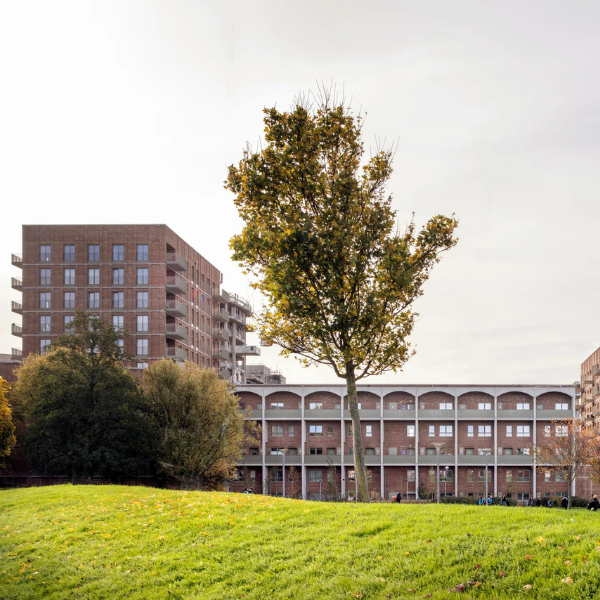
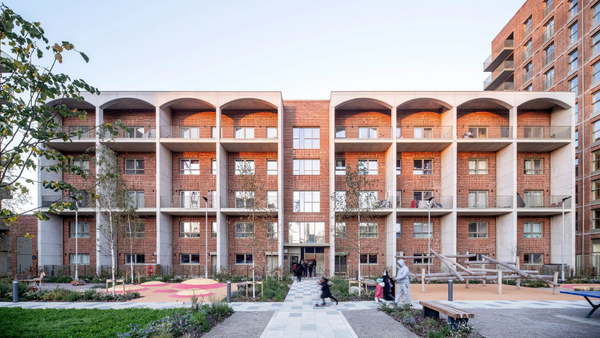
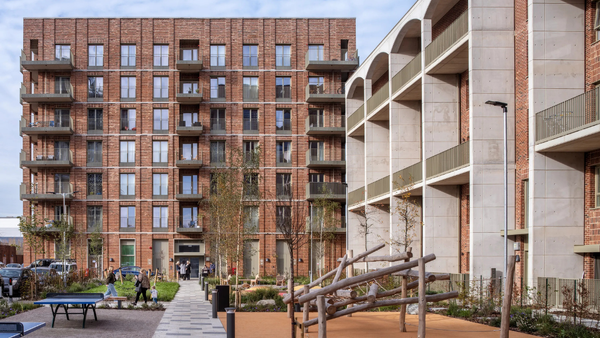
Kidbrooke Park Road will be England’s largest new council housing scheme, ultimately delivering 452 homes. Phase one, completed in just four years from planning to completion, provides 122 net-zero, 100% affordable homes on a challenging brownfield site. Responding to the constrained, triangular plot, the project uses standardised, modular floorplates, dual-aspect layouts, and integrated landscape to deliver the neighbourhood. Integral community facilities, generous play spaces, a nursery, and a new energy centre actively support social value, collectively setting a powerful benchmark for civic-led, climate conscious regeneration.
Who is on the project?
Client - Greenwich Builds, Royal Borough of Greenwich
Architect - HTA Design
Main Contractor - Durkan
Structural Engineer - OCSC
Services Engineer - WSP
Landscape Consultant - HTA Design
Principal Designer - HTA Design
Describe the context of this project and its neighbourhood and how the project was informed by health evidence and housing need.
In an era where political and economic pressures threaten the delivery of affordable homes, Kidbrooke Park Road North stands apart. Located within the wider Kidbrooke Masterplan, this is an exemplary affordable housing-led regeneration scheme, delivering 122 new council homes at scale without compromising on quality or ambition. It transforms a 1.65-hectare disused brownfield site into a net zero carbon neighbourhood, shaped by the council’s commitment to quality, inclusion, and long-term public benefit.
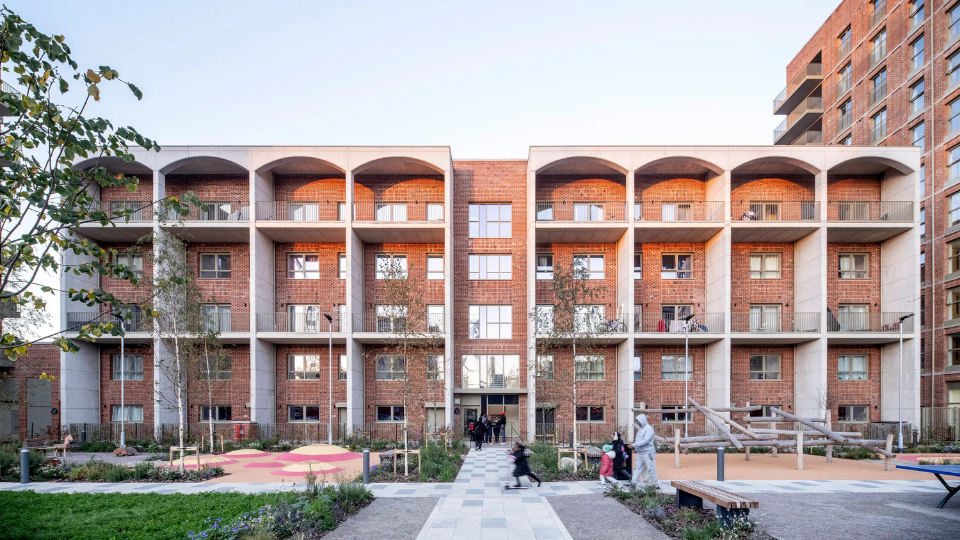
The project directly confronts Greenwich’s urgent housing crisis, providing 100% council-owned homes for families and individuals who have moved from hostels and other insecure living situations. The projects offer one, two, and three bedroom apartments and maisonettes, catering to varied household sizes. 32% are family-sized and 12 are wheelchair accessible, with 80% dual aspect, maximising natural light and ventilation.
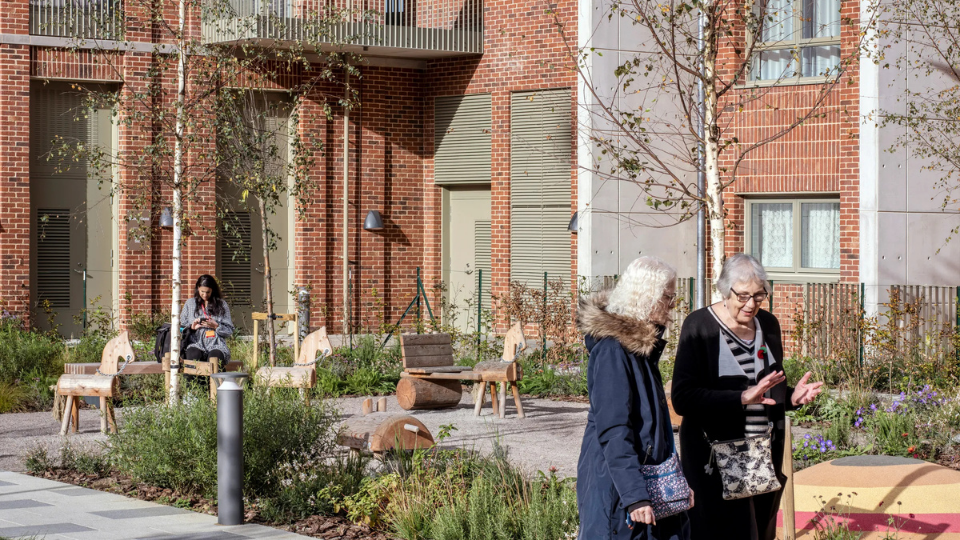
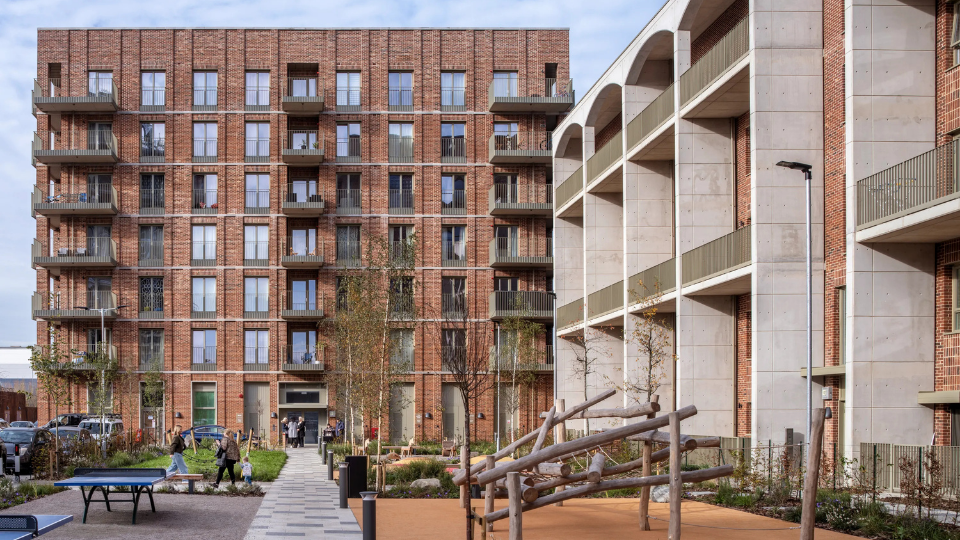
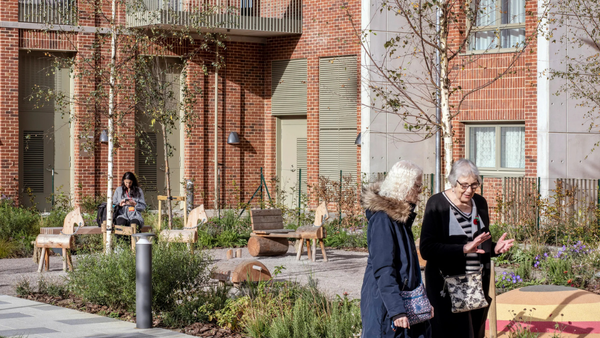
Social infrastructure, designed with public health and wellbeing in mind, promotes comfort and liveability. The new 417m² nursery, adjacent to green communal spaces, offers dedicated classrooms, a dining hall, and over 2,500 sqm of age-specific play areas. Exceeding GLA standards, it supports early childhood development with naturally ventilated interiors and secure outdoor areas. A 50sqm community room acts as a visible hub for resident-led activities, fostering inclusivity. Generous public spaces, a playable garden, and a green corridor linking to Cator and Sutcliffe Parks enhance community connections.
Responding acutely to changing market and policy contexts, the project aligns with key London Plan priorities for brownfield development and regional goals for housing, setting a benchmark for future sustainable urban regeneration.
How does this housing or mixed-use project address the 3 sections of the 12 Healthy Homes Principles with (1) consideration of fire and safety, (2) comfort and inclusion, and (3) how sustainable the design is.
Kidbrooke Park Road North integrates the 12 Healthy Homes Principles across its design, prioritising safety, comfort and inclusion for its residents.
For safety, every residential home is equipped with sprinklers, supported by a dedicated fire-fighting lift to all floors and dry risers. A robust & stay-put fire strategy, effective compartmentation, protected escape routes, and alternative options are in place. Non-combustible materials for facades and balconies exceed building regulations for structures over 18m. Safety from crime is a foundational principle, with the project designed to secure Secured by Design (SBD) accreditation, featuring clear public/private demarcation, natural surveillance, controlled access, and audio/visual entry systems.
Kidbrooke Park Road North delivers 122 net-zero, 100% affordable council homes, offering a mix of 1, 2, and 3-bedroom units to meet diverse needs. Only the second phase completes the project is set to become the largest new council housing development in England, ultimately delivering 445 family homes.
For comfort and inclusion, liveable space in each home exceeds London Plan (2021) internal space standards, including dedicated storage and private external amenity spaces. Access to natural light is maximised; 80% of homes are dual-aspect, promoting excellent daylight and cross-ventilation. Daylight and sunlight assessments confirm superior natural light levels: 95.45% of rooms meet BRE Average Daylight Factor targets, 100% achieve; view of the sky; and 98.3% of assessed windows comply with BRE sunlight standards.
The development ensures excellent access to amenities, nature, and transport, benefiting from strong public transport links to Kidbrooke station and bus routes, and is within walking distance of local services. New public realm, soft landscaping, green infrastructure, and dedicated play spaces are integrated. Extensive secure cycle storage encourages sustainable transport.
Thermal comfort is achieved through a fabric-first approach with high insulation and robust detailing, minimising heat loss and gain. Overheating risk, assessed via CIBSE TM59, is managed through natural ventilation, external shading, and highly insulated fabric for year-round comfort. Ventilation strategies combine natural and mechanical systems for optimal air quality. All ground floor homes are wheelchair accessible (Part M4(3) compliant), 10% of all homes are wheelchair adaptable, and remaining homes meet accessible and adaptable (Part M4(2)) standards. Public realm and internal circulation areas are fully accessible with step-free access.
Kidbrooke Park Road North reduces carbon emissions, targeting an impressive 35% reduction beyond Part L 2013 requirements. This is achieved through efficient building fabric, air source heat pumps, and on-site solar PV panels. Future connection to a district heat network ensures further decarbonization. Ventilation systems minimise external pollutant ingress, and internal materials have low VOC content. Climate resilience is integral, with green roofs and SuDS managing surface water and enhancing biodiversity.
Passive measures like shading, natural ventilation, and the insulated thermal envelope address overheating risks, ensuring homes remain comfortable throughout their lifetime. Materials are explicitly selected for durability and climate resilience. Finally, light and noise pollution are limited. An acoustic assessment informed glazing and façade design to mitigate transport noise, ensuring peaceful internal environments. External lighting minimizes spill and intrusive light pollution, adhering to best practice standards.
Tell us what you did to help promote, monitor or manage health and how this informed the design, delivery and the ongoing governance of the project. Was the community engaged in the process?
To promote health, the design incorporated social infrastructure, including a nursery and community room. The project prioritised generous public spaces, a central playable garden, and a green corridor connecting to local parks, alongside landscaped pedestrian and cycle routes, designed to encourage physical activity. Health was further supported through sustainable design principles, such as low-carbon systems, air source heat pumps, solar panels, and Mechanical Ventilation with Heat Recovery, aimed at reducing environmental impact and enhancing indoor air quality. Durable materials were chosen for longevity and minimal maintenance, contributing to a healthy living environment.
From the outset, the project was shaped by a programme of creative engagement that used a wide range of events and activities to gather insights informing every design decision. During the pandemic, we held virtual workshops to sustain participation and transparency while keeping the programme on track. This gathered crucial insights from various stakeholders, directly informing the development’s layout and character to meet genuine local needs.
For ongoing governance and monitoring, the project commits to a structured POE to track lived experience and environmental performance at 1, 3, and 5 years post-completion. Marking one year since completion, a recent residents’ survey has provided evidence of the project’s success, showing 90% of residents are happy with their new home, 98% believe the landscape suits their needs, and 100% are satisfied with their home’s layout. The scheme’s influence will extend through future phases, continued monitoring, and growing recognition of how councils can lead in delivering inclusive, resilient communities for Londoners.
Gallery

Sign up to our newsletter
Get updates from The Developer straight to your inbox
Thanks to our organisation members
© Festival of Place - Tweak Ltd., 124 City Road, London, EC1V 2NX. Tel: 020 3326 7238