Get updates from The Developer straight to your inbox Yes, please!




Jabal Thabeer, Makkah, Saudi Arabia for Kidana with Gillespies, PUD Consultants, Systematica and Studio 4215
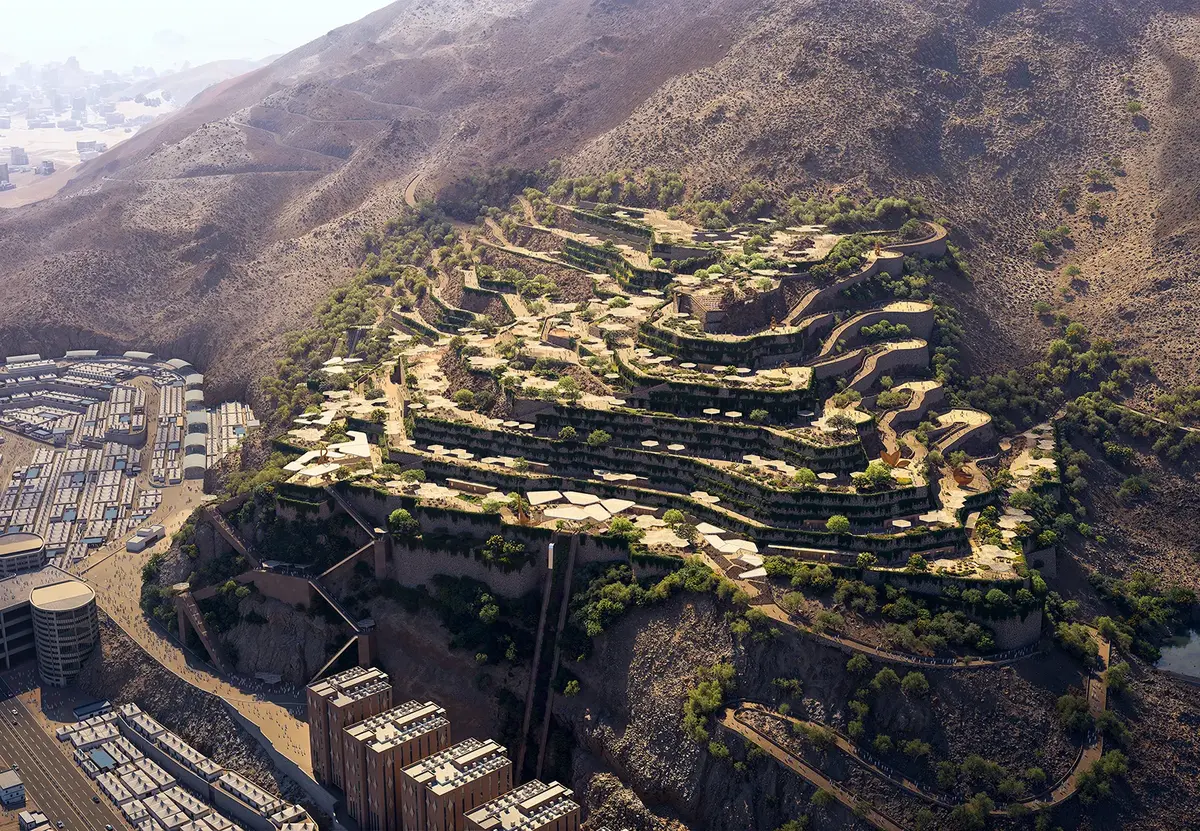
Jabal Thabeer, Makkah, Saudi Arabia for Kidana with Gillespies, PUD Consultants, Systematica and Studio 4215
Jabal Thabeer Park transforms one of Makkah’s sacred mountains into a place of reflection, renewal, and belonging. Rooted in the rituals of Hajj yet looking firmly to the future, the design creates a sanctuary where pilgrims and communities can gather, rest, and connect. Blending faith, landscape, and innovation, Jabal Thabeer is envisioned as a beacon of continuity, a timeless public realm that honours tradition while shaping the spiritual journeys of generations to come.
Describe the context of this project, its neighbourhood and people.
Jabal Thabeer rises from the heart of Mina, one of the most extraordinary urban environments in the world. Each year, more than two million pilgrims converge here during Hajj, transforming the valley into a dense landscape of tents, bridges, and movement. Every metre of space carries meaning, every route is charged with spiritual purpose.
Yet within this intensity, Mount Thabeer has long stood as a threshold -a mountain at the edge of the pilgrimage that was largely inaccessible, its steep terrain creating bottlenecks, its “shadow zone” raising questions of belonging for pilgrims camped beyond Mina’s official boundary. It is a site at once sacred and underused, carrying immense potential to be more than a backdrop.
The people who will experience this place are as diverse as the global Muslim community itself. Pilgrims come from every continent - young and old, families and elders, those with strength and those in need of support. For them, Mina is both a physical challenge and a profound spiritual moment. Beyond pilgrimage, the community of Makkah will also inherit this park as a civic landscape, a rare open space for gathering, culture, and everyday life.
By transforming Thabeer into an accessible sanctuary, the project not only responds to the pressures of crowding, heat, and safety, but also elevates the meaning of the site. It turns an overlooked mountain into a shared civic landmark - one that serves pilgrims in their most sacred journey and enriches the lives of residents year-round.
Please describe your approach to this future place and its mix of uses. How will it function as a vibrant place? How does it knit into and serve the needs of the wider area?
Our approach to Jabal Thabeer is to create a landscape that breathes with the rhythms of Makkah - sacred in its foundations, yet vibrant and adaptable in daily life. The mountain is shaped into a sequence of terraces, shaded courts, and gathering spaces that feel both timeless and alive, a place where stone, greenery, and light guide people through moments of reflection and encounter. During Hajj, the park becomes part of the spiritual journey itself. Terraces open into wide spaces for prayer, while shaded routes, cooling breezes, and the sound of water provide relief from the intensity of the pilgrimage. Kiosks, dining areas, and resting points weave dignity and comfort into the flow of worship. Safe circulation connects directly to Jamarat, easing pressure on the tent city and allowing pilgrims to move with clarity and calm. Beyond pilgrimage, Jabal Thabeer shifts its character to serve the wider community. Restaurants and retail keep life on the terraces active, while seasonal markets, cultural exhibitions, and Ramadan gatherings animate the park with colour and energy. Shuttle services and a funicular connect visitors to the summit, opening views across Mina that were once inaccessible. In this way, Jabal Thabeer becomes more than a park: it is a sanctuary of faith, a stage for civic life, and a green anchor in the dense fabric of Mina, knitting tradition and innovation into a living, breathing future place.
What is the social and environmental impact of the project? For example, how will the carbon use and material impact of the development be mitigated? What is the sustainability strategy? How will this future place contribute to the economic, environmental and social wellbeing of its citizens?
Jabal Thabeer is a project that gives back to its people, its city, and its landscape. Its impact will be felt on many levels, from the wellbeing of individual pilgrims to the environmental resilience of Mina as a whole. Socially, the park transforms the experience of pilgrimage. Where once there was congestion and uncertainty, pilgrims will now find shade, dignity, and clarity of movement. Spaces are inclusive: terraces accessible to families, elders, and people of determination; prayer courts for both large gatherings and intimate reflection; and rest areas that offer comfort in the most demanding of journeys. Beyond Hajj, the park becomes a civic stage hosting community events, seasonal markets, and cultural programmes that enrich everyday life in Makkah. Environmentally, the strategy is deeply rooted in place yet responsive to climate realities. Locally sourced stone is used selectively for walls and cladding to embed the project in its vernacular, while lighter, high-albedo materials are introduced for paving to reduce heat absorption and improve thermal comfort. Planting follows a careful hierarchy: native, low-irrigation species in quiet zones and more water-intensive trees in high-use areas where shade is critical. The modular precast system for retaining walls, seating, and shading structures reduces waste, speeds up construction, and allows selective replacement. This approach was a strategic decision, ensuring not only sustainability but also buildability and efficient delivery on such a complex site. Together, these strategies balance cultural authenticity with environmental pragmatism - a landscape both of its place and prepared for its future.
Sign up to our newsletter
Get updates from The Developer straight to your inbox
Thanks to our organisation members
© Festival of Place - Tweak Ltd., 124 City Road, London, EC1V 2NX. Tel: 020 3326 7238