Get updates from The Developer straight to your inbox Yes, please!




Citizens House, London Borough of Lewisham for London Community Land Trust and Lewisham Citizens with Archio, Price and Myers, Stantec, Kinnear Landscape and ALD
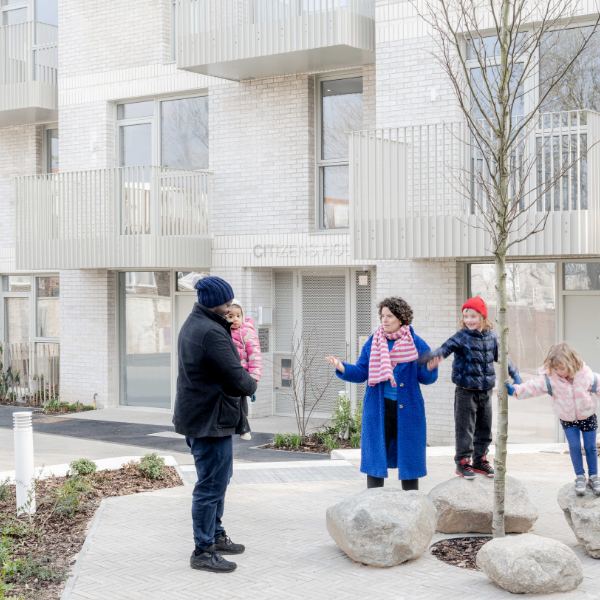
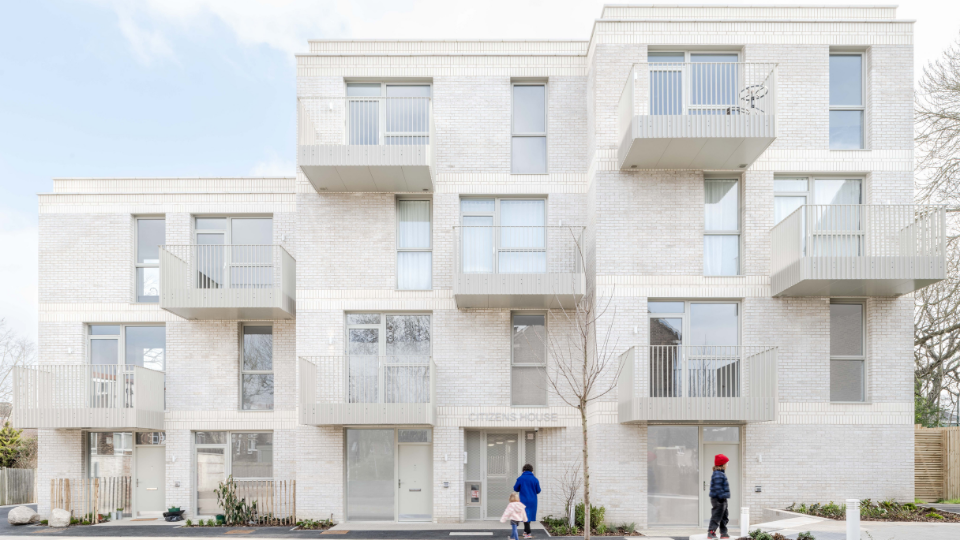
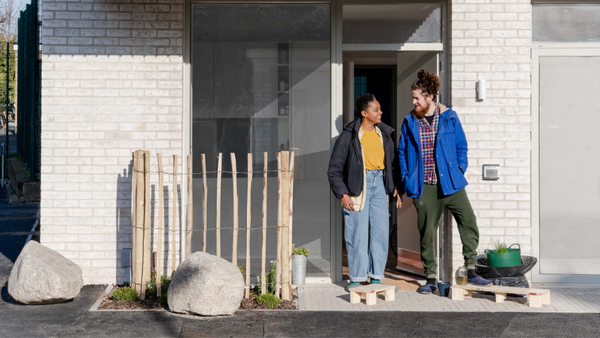
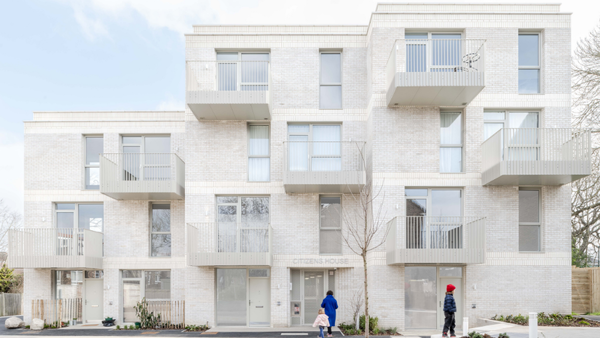
Citizens House, London’s first purpose-built Community Land Trust (CLT) homes, provides 11 genuinely affordable flats, priced at 65% of market value and linked to local wages in perpetuity. Archio, chosen by residents via a public workshop, led an award-winning co-design process. The stepped building overlooks a co-created public courtyard, fostering interaction. Staggered balconies and wide walkways promote community cohesion and children’s play, demonstrating a deep commitment to resident health, affordability, and sustainable community living. The project is a benchmark for community-led healthy homes.
Who is on the project?
Lead Designer / Architect - Archio Ltd
Campaigners - Lewisham Citizens
Project Management - BPM Project Management
Landscape Architects - Kinnear Landscape (planning), ALD (Stage 4-7)
Planning Consultant - CMA Planning
Structural Engineer - Price and Myers (planning), Stantec (Stage 4-7)
Building Control - SOCOTEC
Services - Michael Popper (planning), Whitecode (Stage 4-7)
Transport Consultant - Transport Planning Practice
Quantity Surveyor - Ian Sayer and co
Contractors - Rooff
Funders and Supporters - Lewisham Council Damien Egan, Community Led Housing London, GLA (Charli Bristow, Tom Copley, Sadiq Khan), Ecology Building Society, Big Issue Invest
Specialist Consultants - Arboreal, Connick Tree Consultants (Tree Consultant), MLM/Sweco (Fire Consultant), Waterslade Ltd (Daylight/Sunlight Consultant)
Describe the context of this project and its neighbourhood and how the project was informed by health evidence and housing need.
Citizens House arose from a 2014 grassroots campaign by Lewisham Citizens, directly confronting a housing crisis forcing essential workers from their neighbourhood. In Lewisham, where median house prices were thirteen times the average salary, key community members faced displacement, fracturing vital social networks. The project transformed a neglected backland garage site, previously plagued by fly-tipping and antisocial behaviour, into a community asset.
From the outset, this project was conceived around the healthy homes ethos for its future residents. Our client, London CLT, prioritises not only creating genuinely affordable homes, but also significantly improving the wellbeing and happiness of residents. Before construction, London CLT undertook the "CLTs and Urban Health" report, which revealed that only 17% of future residents were satisfied with their physical health and a mere 8% with their mental health, experiencing conditions like stress-induced migraines and damp-related asthma due to precarious living. Post-occupation, these figures dramatically improved to 78% for physical health and 56% for mental health.
This direct evidence informed our co-design, incorporating triple-aspect homes for abundant natural light to enhance physical and mental wellbeing, and social spaces like staggered balconies, extra-wide walkways, and a co-designed public piazza to foster interaction, community cohesion, and active living. The design directly addressed resident’s identified needs for stability, community, and healthier environments.
How does this housing or mixed-use project address the 3 sections of the 12 Healthy Homes Principles with (1) consideration of fire and safety, (2) comfort and inclusion, and (3) how sustainable the design is.
(1) Safety and Security
Considering the site’s history of antisocial behaviour and fly-tipping, we put safety from crime at the forefront of many design features. In locating the building aside a new public square, this opens a new key pedestrian route, adjacent to the entrance to a neighbouring primary school. We placed ground floor front doors and south-facing balconies overlook the new public space, actively deterring anti-social behaviour previously prevalent on the site. Before moving, 30% of residents felt slightly or very unsafe in their neighbourhood at night; post-move, this dropped to 0%. Satisfaction with feeling "very safe" in their home increased from approximately 50% to 90%.
(2) Comfort and Inclusion
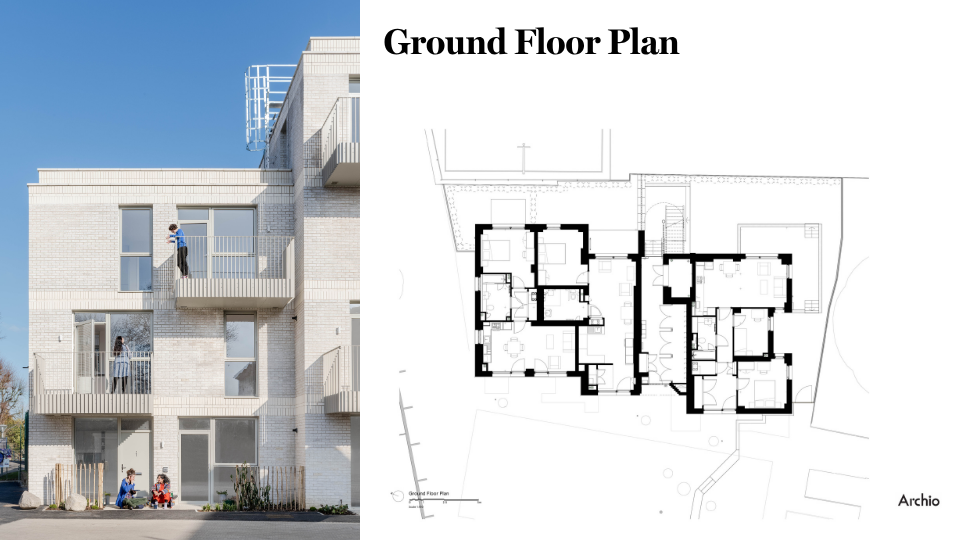
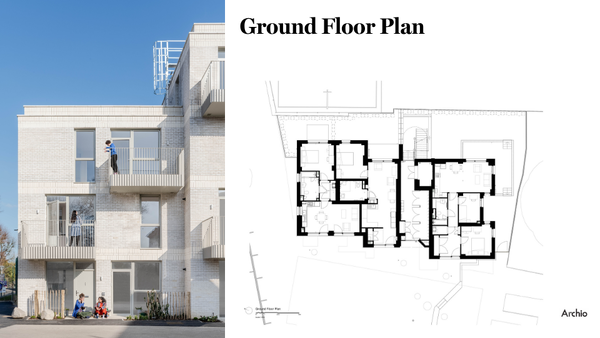
Homes range from 50.6 to 69.6 sqm, offering liveable space, with extra-wide entrance halls in two-bed units providing flexible work-from-home or play areas. Generous balconies and shared outdoor spaces enhance private and communal amenity. The homes are flooded with natural daylight through the floor-to-ceiling windows, crucial for mental health, sleep, and vitamin D synthesis. The project promotes active travel with only 5 car parking spaces for 11 homes, ample secure cycle storage, within a neighbourhood boasting walkable services, parks, and a resident-designed "piazza" for play and social interaction. Thermal comfort is achieved through a fabric-first approach, high insulation, and excellent soundproofing, ensuring a quiet, warm environment (heating and hot water load: 74.4 kWh/m²/year). We also made sure that Citizens House was inclusive, with one M4(2) adaptable and one M4(3) wheelchair user unit at ground floor, plus convenient pram stores at the entrance.
(3) Sustainable Design
Citizens House embodies sustainable design principles. A predicted energy use of 47.6 kWh/m2/yr, coupled with 10.5% on-site renewable energy generation from photovoltaic panels, ensures radical reductions in carbon emissions. While gas boilers were specified due to building regulations and cost constraints at the time, high efficiency, low NOx models were chosen to minimise air pollution. New tree planting further enhances biodiversity and air quality. Climate resilience is addressed through 100% dual/triple aspect homes, vital for Part O overheating requirements and natural cross-ventilation. An attenuation tank and permeable clay pavers manage surface water, mitigating flood risk. The design provides good sound insulation and strategic positioning away from main roads to limit light and noise pollution, creating a tranquil environment that directly supports human flourishing. Financial sustainability was also central, through the robust building design, and the discount market sale rate of the genuinely affordable homes, ensuring long-term low management costs for residents.
Tell us what you did to help promote, monitor or manage health and how this informed the design, delivery and the ongoing governance of the project. Was the community engaged in the process?
Promoting and managing health was woven into Citizens House from its grassroots origins. The project began with a campaign by Lewisham Citizens, enabling genuine community ownership and directly informing health priorities. Archio’s co-design methodology, starting with a "temporary architect’s office" on site, involved over 30 residents and 48 primary school students in making and modelling. This process, recognised with a Pineapple Award for “Community Engagement” and "Best Community Engagement Outcomes" at the London Planning Awards, ensured design decisions were truly people-centred. For example, residents co-designed the hard-landscaped "piazza" for active play and communal events, rejecting a grassy area, creating a safe, vibrant space for youth wellbeing, evidenced by local teenagers roller-skating there.
The design directly integrated health-promoting features: staggered balconies and extra-wide walkways foster social interaction, combating loneliness. Triple-aspect homes maximise natural light, crucial for mental health. Post-occupation, the "CLTs and Urban Health" report actively monitors health outcomes, validating significant improvements in residents’ physical and mental wellbeing, as sourced earlier in this entry. Ongoing governance through a Resident Management Company and active WhatsApp group fosters mutual support, allowing residents to collectively manage their environment. This continuous engagement, from design to ongoing stewardship, ensures the project not only delivered homes but actively promoted and sustained community health.
Gallery

Sign up to our newsletter
Get updates from The Developer straight to your inbox
Thanks to our organisation members
© Festival of Place - Tweak Ltd., 124 City Road, London, EC1V 2NX. Tel: 020 3326 7238