Get updates from The Developer straight to your inbox Yes, please!




Bradford City Centre Walking and Cycling Improvements Scheme, Bradford for West Yorkshire Combined Authority and City of Bradford Metropolitan District Council with Balfour Beatty, Sweco and Gavin Jones
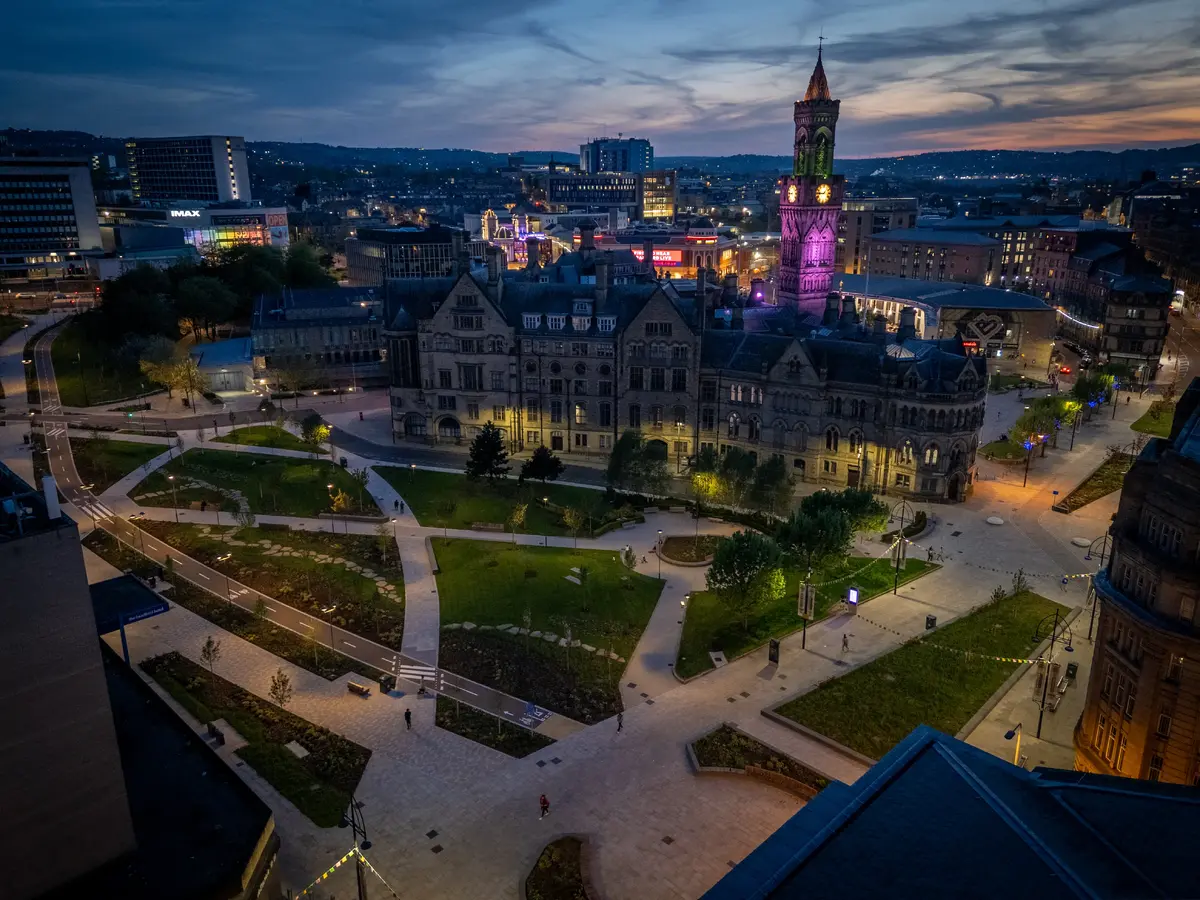
Bradford City Centre Walking and Cycling Improvements Scheme, Bradford for West Yorkshire Combined Authority and City of Bradford Metropolitan District Council with Balfour Beatty, Sweco and Gavin Jones
The Bradford City Centre Walking and Cycling Improvements Scheme – Transforming Cities Fund scheme represents a bold reimagining of mobility and public realm, placing health, equity, and sustainability at the heart of regeneration. Its purpose is to reshape Bradford city centre into a cleaner, greener and more inclusive environment, encouraging walking, cycling and public transport ahead of car dominated gridlock, while delivering long-term improvements in health, wellbeing and climate resilience.
Describe the context of this project, its neighbourhood and people.
The Bradford City Centre Walking and Cycling Improvements Scheme sits at the heart of one of the UK’s youngest, most diverse urban populations, where decades of car-dominant planning, congestion and poor air quality have contributed to some of the country’s worst health inequalities. Bradford city centre is a place of great civic pride but had long suffered from fragmented streets, limited green space, and barriers that discouraged walking, cycling and public transport use.
The scheme responds to this context by re-balancing space in favour of people, climate resilience, inclusive mobility and health. It showcases the city’s built heritage enhancing the setting of 100 listed building revealing their qualities. It serves communities living in some of England’s most deprived wards, many of whom rely on walking or public transport and disproportionately experience the health effects of poor-quality public realm, polluted air and unsafe streets.
The project connects key destinations, educational institutions, workplaces, cultural venues, the Interchange and Forster Square train stations, ensuring safer, cleaner and more intuitive journeys across the city. It also supports major regeneration and cultural investment linked to Bradford’s designation as UK City of Culture 2025.
Through co-design, targeted engagement and accessible design principles, the project prioritises groups often excluded from city-centre regeneration: young people, disabled people, women, older residents, local traders and ethnically diverse communities.
The result is a city centre transformation rooted in Bradford’s identity, welcoming, walkable, fair and environmentally ambitious, creating a healthier, greener and more connected place for all.
Tell us what you did and how it was designed and delivered.
The project was delivered through Bradford Council’s plan, supported by a multi-disciplinary team including local authority landscape architects, civil engineers, transport planners and environmental specialists. The scheme was funded through the West Yorkshire Combined Authority’s Transforming Cities Fund.
Balfour Beatty were engaged through the SCAPE 2 Framework to form a collaborative partnership with the council. They assembled a design team to work with the council to develop the design and plan for delivery. Strong governance ensured robust financial management, design quality and programme delivery, structured reporting, risk management, and procurement strategies aligned with public accountability.
Design was landscape-led, using a “streets for people” approach that prioritised safety, accessibility, climate resilience and public health. Key features include extensive pedestrianisation, segregated cycle routes, SuDS, biodiversity-rich planting, rain gardens, pocket parks and a major expansion of Norfolk Gardens. Built form, materials and detailing were chosen for aesthetic appeal, heritage suitability, longevity, reduced maintenance and carbon efficiency.
A rigorous co-design and engagement programme shaped the project. Residents, businesses, schools, disability groups, transport operators, community organisations and statutory partners contributed to design options, accessibility audits and placemaking priorities. The scheme was refined through targeted conversations with seldom-heard communities, and close collaboration with traders.
Viability was strengthened by integrating climate adaptation, health outcomes and regeneration benefits into cost–benefit assessments. Phased delivery allowed finished sections to open, ensuring the public could benefit early and disruption was reduced.
This governance and engagement approach created a transparent, accountable and community-informed project that was resilient, deliverable and widely supported.
What is the social and environmental impact of the project?
The scheme brings significant social and environmental benefits by transforming Bradford into a cleaner, safer and more connected city centre. By prioritising walking, cycling and public transport, it reduces car dependency, cuts emissions and improves air quality, particularly important in a district with high childhood asthma rates and longstanding health inequalities. Pedestrian areas have increased by 80%, and 1.8 km of roads have been closed to traffic, creating calmer, more equitable public spaces for all ages and abilities.
Environmentally, the project incorporates 31,500m2 new green space, SuDS features, rain gardens and climate-resilient planting, delivering a 24% Biodiversity Net Gain. These interventions support cleaner air, cooler streets, reduced flood risk and improved urban habitat.
Socially, the project enhances safety, accessibility and inclusivity. Wider footways, continuous level surfaces, tactile paving, improved lighting and safer junctions create a navigable environment for disabled people, families and older residents. The revitalised public realm encourages active lifestyles, promotes social interaction and strengthens civic pride.
Connectivity has improved dramatically: new cycleways and walking routes link neighbourhoods to the city’s key destinations, transport hubs, workplaces and cultural assets, supporting economic vitality and Bradford’s journey through City of Culture 2025.
The way people use the city has changed. Dwell time has increased as the city has become a destination in its own right. Families now use the new green spaces for play and relaxation. There is a renewed feeling of optimism in across the district with public perception of the city centre improving significantly.
Sign up to our newsletter
Get updates from The Developer straight to your inbox
Thanks to our organisation members
© Festival of Place - Tweak Ltd., 124 City Road, London, EC1V 2NX. Tel: 020 3326 7238