Get updates from The Developer straight to your inbox Yes, please!




Black Rock Brighton Seafront, Brighton for Brighton & Hove City Council with LUC, Rose, Mott Macdonald, Marloes Conservation, Kew Gardens and Landbuild Ltd
Black Rock Brighton Seafront, Brighton for Brighton & Hove City Council with LUC, Rose, Mott Macdonald, Marloes Conservation, Kew Gardens and Landbuild Ltd
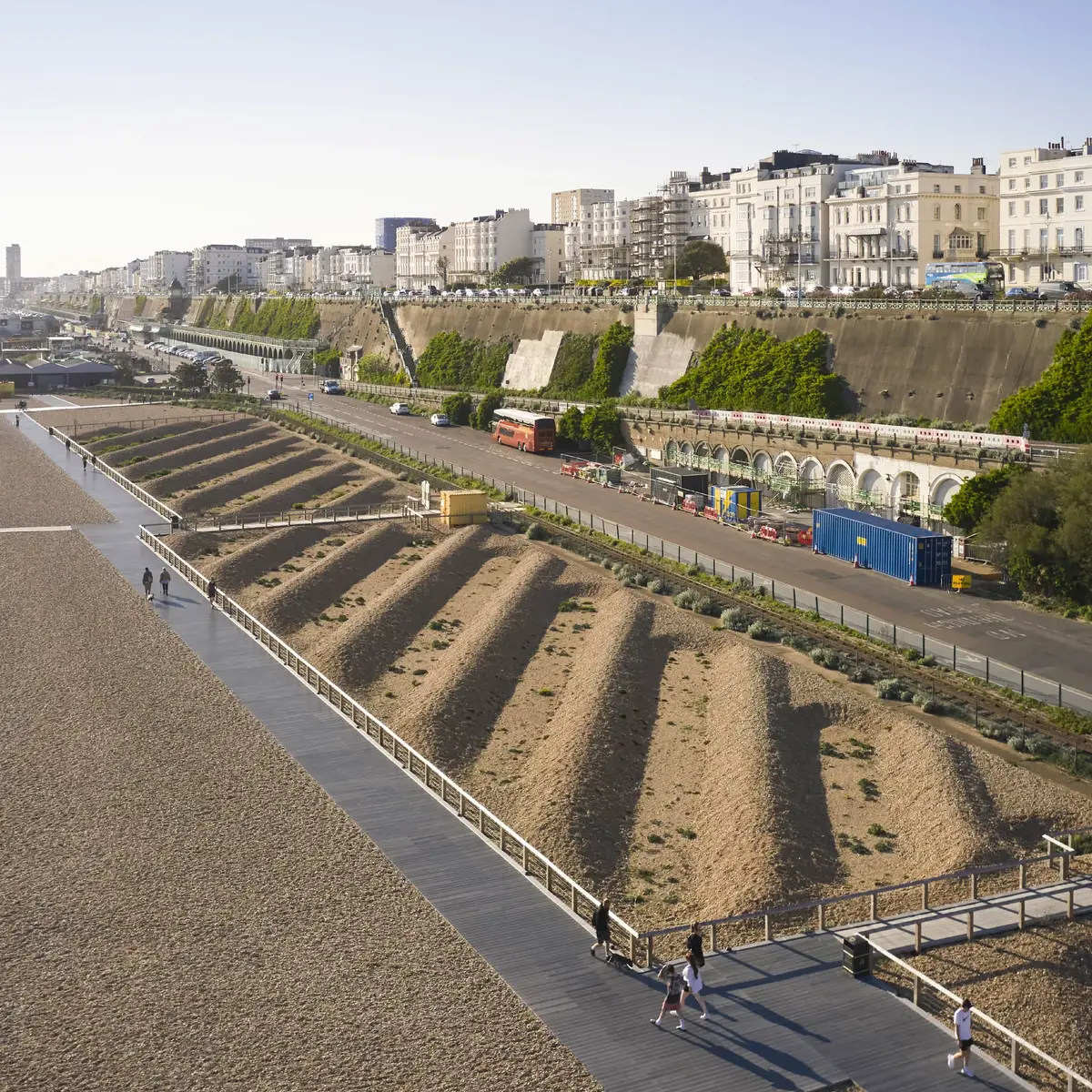
Black Rock’s transformation from a neglected dead-end into Brighton’s newest coastal destination demonstrates landscape-led regeneration at its finest. The introduction of a 750m long recycled plastic beachside boardwalk creates a broad, traffic-free pedestrian link, while restored heritage buildings, and 1.5 hectares of translocated vegetated shingle habitat, means this £12 million project has activated a forgotten kilometre of seafront. Meanwhile uses including Pedal People charity and Beach Box Sauna now enliven the space, driving footfall and reconnecting communities to nature, heritage, and each other.
Describe the context of this project, its neighbourhood and people.
Black Rock, 1km east of Brighton Palace Pier, had remained vacant and underused since the Lido’s closure in 1978. The site became a forgotten dead-end plagued by poor connectivity, anti-social behaviour, and derelict heritage structures. Dense Tamarisk obscured historic Regency gardens, while the Grade II-listed Reading Room and Temple fell into disrepair, attracting rough sleeping and drug use.
Despite its reputation as a no-go zone, Black Rock held extraordinary potential. Its expansive beach, rich maritime heritage (including the UK’s oldest naturist beach and home of the world’s first electric railway), and position between central Brighton and the Marina offered unique regeneration opportunities. The steep 16-20m level change from Marine Parade to beach, combined with fragmented pathways and the heritage Volks Railway, created significant accessibility barriers for Brighton’s diverse communities. The neighbourhood serves a wide demographic, from Kemp Town residents seeking quality public space, to naturist beach users, skaters and graffiti artists who claimed the derelict Lido, and tourists exploring Brightons coast. Past development proposals, including large event arenas, had repeatedly failed, leaving locals cynical. Developed during Covid lockdowns, the project’s timing was pivotal. The pandemic underscored the value of accessible, high-quality outdoor space. Working with £12 million Local Enterprise Partnership (LEP) funding and through extensive community consultation, LUC led a landscape-first approach that balanced conflicting needs: heritage lovers wanting restoration, counter-culture groups protecting informal uses, residents demanding safety improvements, and ecologists requiring biodiversity enhancement. The challenge was activating this complex, contested space while respecting its diverse communities and unique character.
Tell us what you did and how the project, event or installation enlivened the place in a creative way?
We transformed Black Rock through a series of interconnected activations that work as both immediate interventions and catalysts for long-term transformation. The 750m long Boardwalk became the project’s spine – a generous, accessible route constructed from 220 tonnes of recycled plastic (7.3 million bottles). Its meandering form slows pedestrian pace, while jetties extending to the beach crest create vantage points and gathering spaces. Subtle low-level lighting extends usability into winter evenings, dramatically changing perceptions of safety and welcome. Heritage reactivation breathed life into derelict structures. The restored Reading Room now operates as a thriving café and supper club, a destination drawing locals and tourists for coffee, meals, and horizon views. The symmetrically aligned boardwalk jetty perfectly frames Sussex Square’s axis, reconnecting the historic Regency vision with contemporary use. Ecological theatre turned habitat creation into spectacle. Working with Kew Gardens, we translocated a Local Wildlife Site, creating 1.5 hectares of wave-patterned vegetated shingle. Three cast-aluminium Beachcombers sculptures by local artists Anna Dumitriu and Alex May celebrate nature, people, and engineering heritage. Low protective fencing doubles as interpretation platforms, making ecology visible and engaging. Meanwhile, activations ensure ongoing animation. Pedal People (MBE-awarded charity) occupies the cleared Lido site, while Beach Box Sauna adds year-round activity. The flexible events space hosts markets, festivals, and community gatherings, replacing anti-social behaviour with vibrant public life. Improved connections included new Marina links, upgraded Madeira Drive crossings, and restored routes to Undercliff Walk, knitting previously isolated fragments into a continuous, activated coastal experience.
Did the project make a positive social and environmental contribution? If it was a temporary intervention, is there a legacy plan? What happened to its tenants, users, materials and programming?
The project delivers permanent social and environmental transformation with immediate and lasting benefits:
Environmental contributions:
• Carbon reduction: 220-tonne recycled plastic boardwalk diverted 7.3 million bottles from landfill, minimising new material impacts
• Biodiversity net gain: Expanded Local Wildlife Site from 0.19 to 1.5 hectares, creating essential ecological corridors supporting species
• Climate resilience: Raised, realigned sea wall (moved seawards, elevated 3.5m) addresses flood risks and temperature adaptation
• Sustainable mobility: Improved pedestrian/cycle links reduce vehicle dependency, cutting emissions and air pollution
• Habitat restoration: Four-pronged translocation strategy (direct translocation, Kew propagation, seed sowing, soil transfer) achieved exceptionally high establishment rates with 30-year management commitment
Social contributions:
• Accessibility revolution: Previously inaccessible site now features Access for All routes, including terraced Reading Room approach, replacing 1:8 gradients
• Heritage preservation: Restored Grade II-listed structures now support viable businesses, preserving cultural assets and creating employment
• Community assets: Meanwhile uses (Pedal People, Beach Box Sauna) provide social enterprise and wellness facilities
• Safety transformation: Former anti-social behaviour hotspot now vibrant, well-used public space
• Inclusive design: Facilities serve diverse users (naturists, families, cyclists, tourists, locals) through thoughtful spatial planning, resolving previous conflicts
• Legacy framework: The permanent infrastructure supports long-term development while immediate interventions establish new patterns of use.
Flexible event spaces, meanwhile tenancies, and restored heritage create a sustainable activation model, reducing council maintenance pressures. The 30-year ecological management plan ensures habitat longevity, while community partnerships (Kew Gardens, Pedal People) embed ongoing stewardship and engagement.
Gallery

Sign up to our newsletter
Get updates from The Developer straight to your inbox
Thanks to our organisation members
© Festival of Place - Tweak Ltd., 124 City Road, London, EC1V 2NX. Tel: 020 3326 7238